Virtual Campus School: Turning Learning Barriers into Breakthroughs with Kami

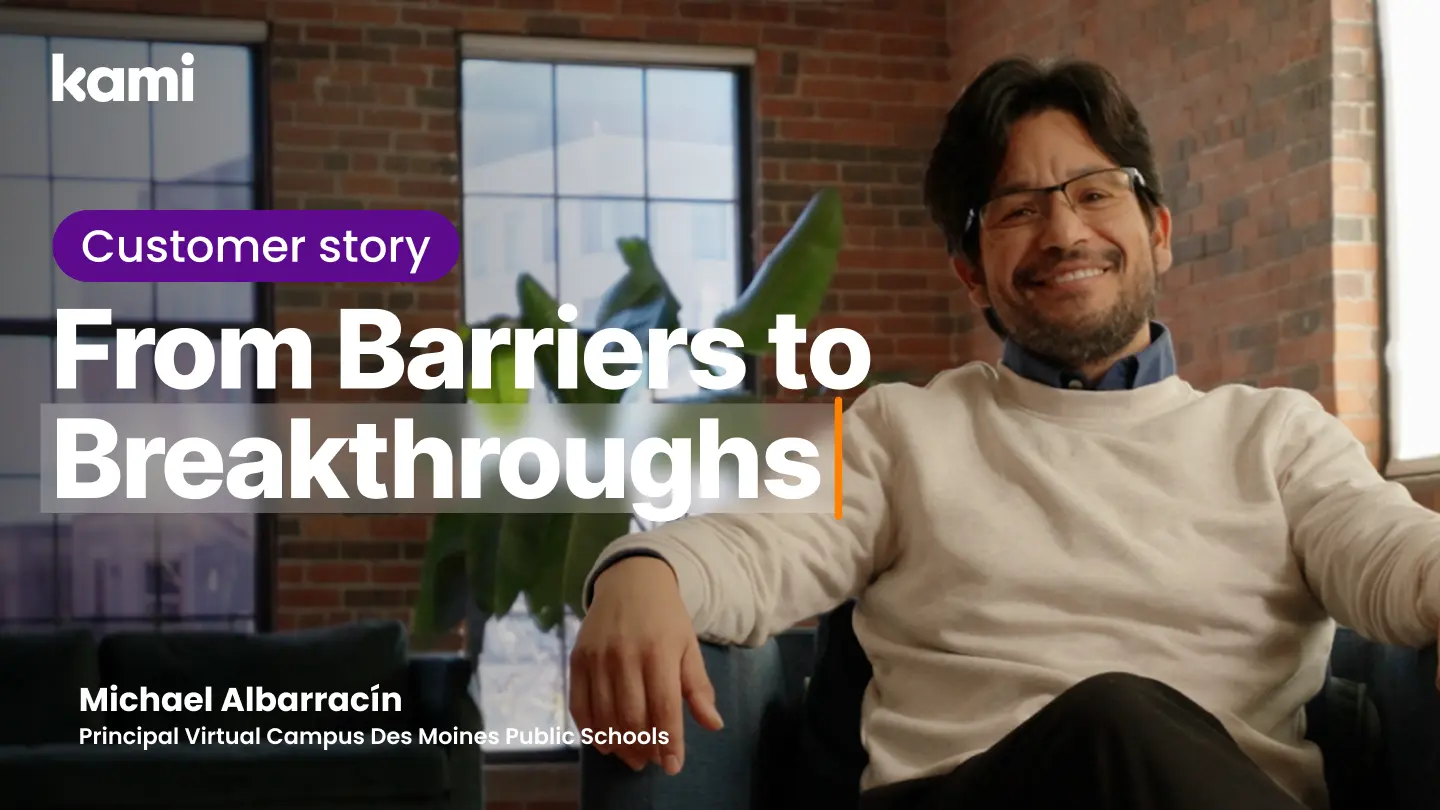

When Principal Michael Albarracín reflects on his journey in education, he begins with people, not metrics or programs.
“I was actually an ELL when I first started public school,” he shared. “I had access to mentors and teachers that greatly cared about my growth and development.”
Early experiences—a mother who encouraged exploration, teachers who pushed him academically, music programs that opened pathways to college—shaped his worldview. They showed him that education is the great equalizer, not because of buildings or schedules, but because of the people who consistently show up for students.
Today, as principal of Virtual Campus School, Iowa’s only public online high school offering live instruction every day, Albarracín brings that same commitment to the students who need it most.
Today’s Learners Need Flexible Virtual Schooling
Virtual Campus School serves more than 380 students across the state of Iowa, students whose needs do not fit neatly inside the walls of a traditional school.
Their student population reflects several major shifts in education today:
- Demand for flexible pathways:
Students want dual credit, career experiences, and daily access to certified teachers. For example student-athletes and learners whose schedules involve high-level commitments outside standard school hours. - Geographic equity gaps:
Rural or under-resourced students too often miss out on AP, CTE, or advanced courses. - Rising mental health and medical needs:
More students are seeking personalized learning support as they navigate stress, family or situational challenges, and mental health concerns. - Chronic disengagement:
Growing absenteeism and disengagement from traditional school models is a concerning pattern that is emerging nationwide.
Virtual Campus School serves learners by providing a high-quality online learning environment with live instruction that flexes to these needs.
The Digital Dilemma: Too Many Platforms, Too Little Visibility
But it’s not always straightforward “Some of the biggest challenges our teachers face with delivering live instruction is making sure students are engaged during the lesson. In the virtual world, that is a lot harder,” Albarracín said. “Life before Kami was very difficult.”
This fragmentation created real barriers with teachers juggling three to five tools per lesson:
- Canvas for submissions
- Teams for chat
- GoGuardian for screens
- Amplify for math
- Email or messaging for communication
Students on the other hand felt isolated when they reached out for help and there was a delay. Often because the teacher was navigating 20 to 40 private chats at once while also switching between several platforms to check progress.
And when it came to the work, writing assignments were frequently lost in the download, save, and upload process – in some cases 60% of assignments weren’t submitted. There was also a population of students that struggled to know where to begin in their writing.
The Shift to One Real-Time Learning Tool, Collaboration and Feedback Platform
When Virtual Campus introduced Kami, it was a structural solution, not an add-on. Albarracín explained. “Instead of switching screens or waiting for a student to hit submit I can now see what you are typing in real time.”
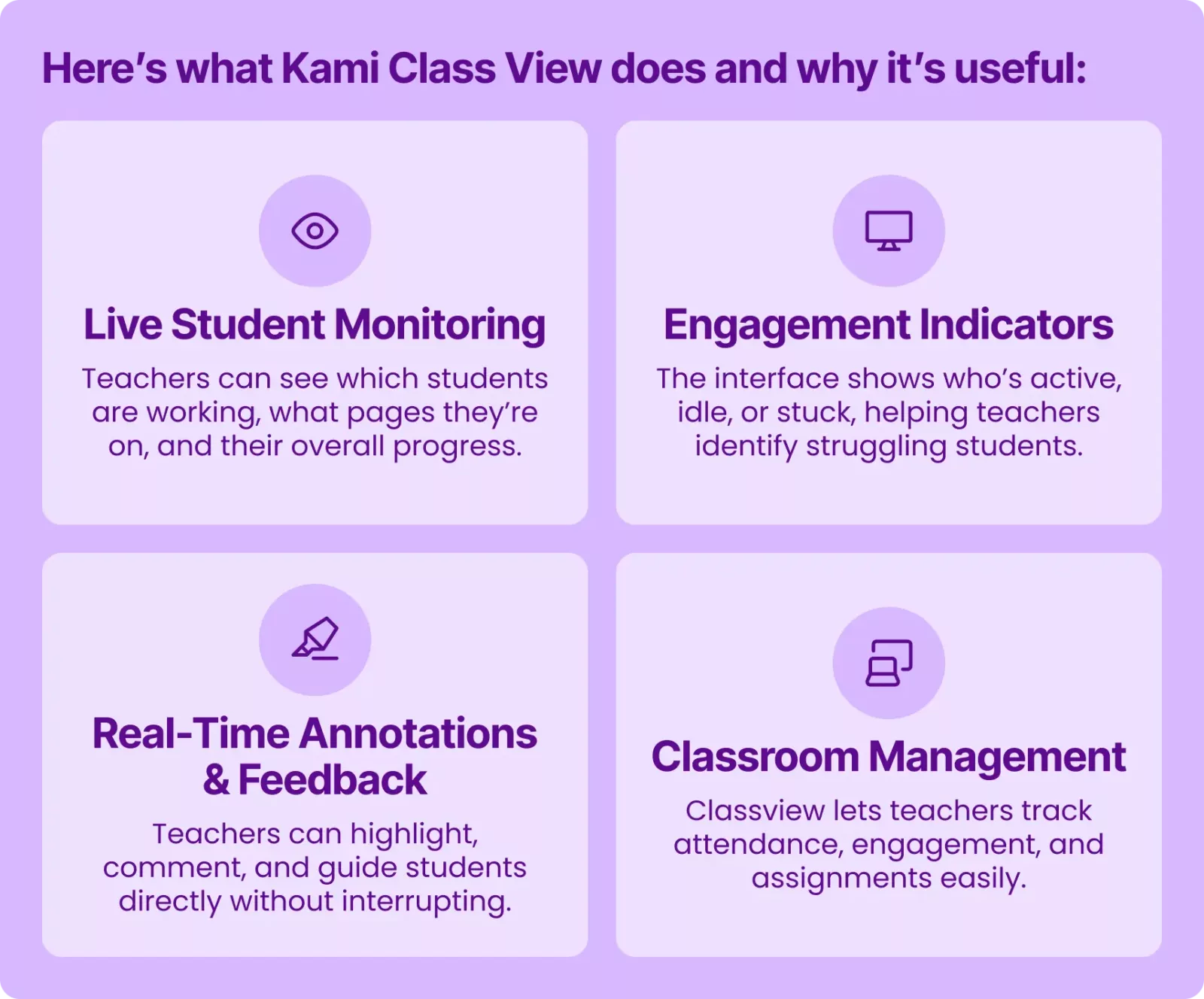
To make that level of visibility possible, Virtual Campus leaned heavily on one tool in particular: Kami Class View. A feature designed to give teachers real-time overview of student activity in a live classroom setting.
While these improvements transformed instruction at Virtual Campus School, the underlying problems they solved are common across districts. Many schools are navigating fragmented tools, limited visibility into student work, and increasing pressure to support learners in real time.
What District Leaders Can Learn from Virtual Campus School’s Model
Virtual Campus demonstrates that the future of learning is not just digital. It is connected. Kami played a central role in strengthening that connection by removing friction, increasing visibility, and supporting more equitable learning conditions.
Here are the key ways Kami helped address the challenges Virtual Campus faced:
- Kami reduces cognitive load by simplifying workflows
Before Kami, teachers juggled multiple platforms per lesson. By unifying feedback, progress monitoring, and submission into one space, Kami reduced tool switching and helped teachers stay focused on instruction. - Kami strengthens learning outcomes through real time visibility
Teachers can see every student’s work as it happens, allowing them to give timely feedback and intervene early. As Albarracín noted, this was a major shift in how teachers supported students during live instruction. - Kami improves equity by removing technical barriers
Students no longer lose work in the download, save, upload cycle. With fewer steps, more writing assignments are submitted, and teachers can focus on teaching writing skills rather than troubleshooting files. - Kami helps online learning feel more human
By allowing teachers and students to collaborate on the same document in real time, Kami recreates the feeling of a teacher walking the room and giving feedback over a student’s shoulder. This contributed to a greater sense of connection and community. - Kami supports flexible pathways by enabling high quality live instruction anywhere
As districts expand dual credit, AP access, and alternative programs, Kami provides the instructional infrastructure needed to maintain consistent, high quality learning experiences across zip codes and learning models.
A New Model for a Connected Future
“The future of learning is no longer defined by walls and buildings,” Albarracín said. “It resides more in the communities that we build.”
Virtual Campus, supported by the right instructional tools, is proving that with thoughtful design, virtual learning can be not only effective but transformative.
👉 Learn more about Kami and Book Creator today.
Blogs you may also like
An Educator’s Journey with Kami

Engaging every learner: How Kami transforms passive lessons into active learning
One platform, every learner: How Fond du Lac School District transformed digital learning with Kami