How Jeff Kilner and His District Transformed Teaching with Kami

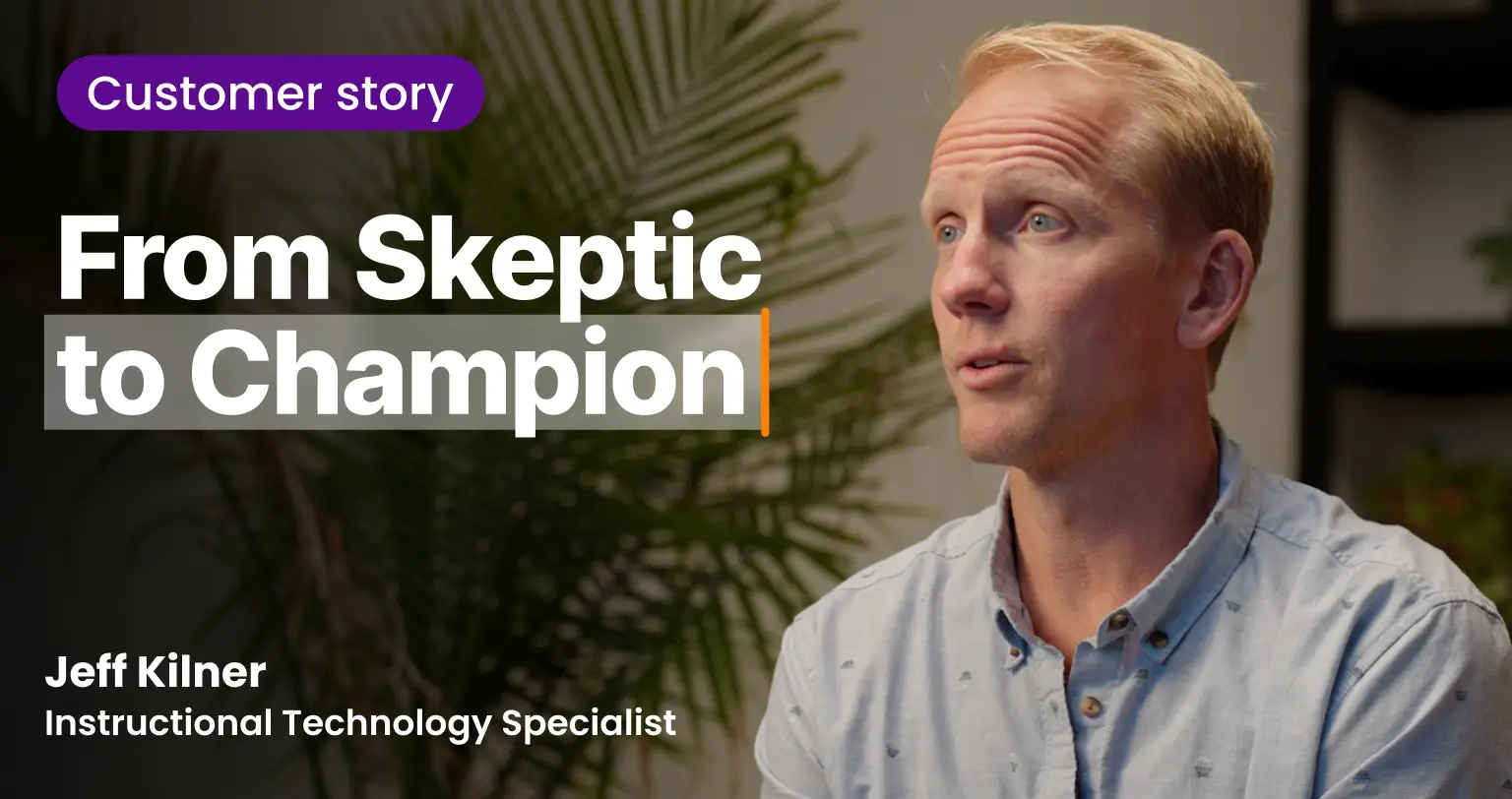

When Jeffrey Kilner watched his five-year-old daughter climb aboard the school bus for her first day of kindergarten, something shifted.
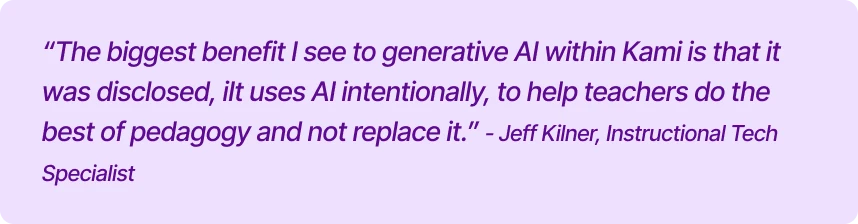
“Now it’s real for me,” he said. “Before it was always other people’s kids, now it’s my own.” That moment reframed his work completely. As the Instructional Technology Specialist for Delaware’s Indian River School District, Kilner supports over 1,000 educators and 11,000 students by helping teachers use technology to make learning more inclusive and equitable, intentional, and, sometimes, a little lighter.
“My job is to help teachers use tools in ways that interrupt inequitable practices and make their workload a little lighter,” he said.
1. The Challenge and the Opportunity: Meeting Educators Where They Are
Educators today are navigating unprecedented challenges: wider learning gaps, tighter schedules, and mounting pressure to deliver equitable instruction in inclusive classrooms.

For Kilner, these statistics aren’t abstract numbers, they’re his colleagues’ daily reality. “Teachers’ plates just keep getting fuller,” he said. “The question is: how do we use technology to actually lighten the load, not add more to it?”
At Indian River, that question led to Kami. Rather than layering another platform onto teachers’ already complex workflows, Kami provides one integrated space to create lessons, give feedback, support differentiation instruction, and embed classroom accessibility tools. It’s a tool designed not just to digitize instruction but to transform how teaching happens in a classroom where time, equity, accessibility and engagement are all at a premium.
2. Four Shifts Redefining Instruction and How Kami Supports Them
Across U.S. schools, four powerful shifts are shaping teaching and learning. Here’s how Indian River is responding, with Kami at the center.
2.1. The Literacy Gap: Differentiation Without Extra Work
The challenge
Reading proficiency is declining, yet expectations remain high. Teachers need ways to give all students access to grade-level content without spending hours rewriting lessons.
Why it matters
Without tools for differentiation, mid and lower-level readers fall behind, and advanced students aren’t challenged.
How Kami helps:
- Read Aloud & Text-to-Speech
Supports lower- and mid-level readers. For example students struggling with fluency or comprehension can listen to grade-level text while following along plus express their understanding freely. - Relevel tool
Supports all learners by allowing text to be rephrased into different grade levels. For example a single lesson can meet students at multiple Lexile levels without creating duplicate materials.

“I spent hours rewriting texts for different student levels. Now the Relevel tool takes care of it, and each student gets the support they need without extra work from me.”
2.2. Teacher Workload: Simplifying the Digital Chaos
Across U.S. schools, four powerful shifts are shaping teaching and learning. Here’s how Indian River is responding, with Kami at the center.
The challenge
Too many platforms, too many passwords, and too little time. Teachers are forced to juggle multiple tools to plan, deliver, and grade lessons.
Why it matters
Time lost to switching between tools is time lost for instruction, feedback, and meaningful interaction. Teachers often feel they must be “the tool expert in the room” which can also impact tool confidence.
Kami solutions & classroom examples:
- Integrated Workspace & LMS Integration
Embed video, voice, and annotations without switching platforms. Kami integrates with Google Classroom, Canvas, Microsoft Teams, Schoology and more. - Reusable Templates & Collaboration
Share lessons and feedback efficiently. Example: Teachers can quickly adapt content for lower-, mid-, and advanced-level learners, freeing hours each week. - The power of Kami Class View
Teachers can view entire class assignments at the same time, monitor student’s progress in real-time, leave live feedback and grade multiple students’ work simultaneously.
2.3. Accessibility by Design: From Compliance to Empowerment
The challenge
Inclusion often comes as an afterthought, creating extra work and inequitable access.
Why it matters
When accessibility is built in, all students — including those with higher needs — can participate fully without teachers spending hours creating alternative versions.
Kami solutions & classroom examples:
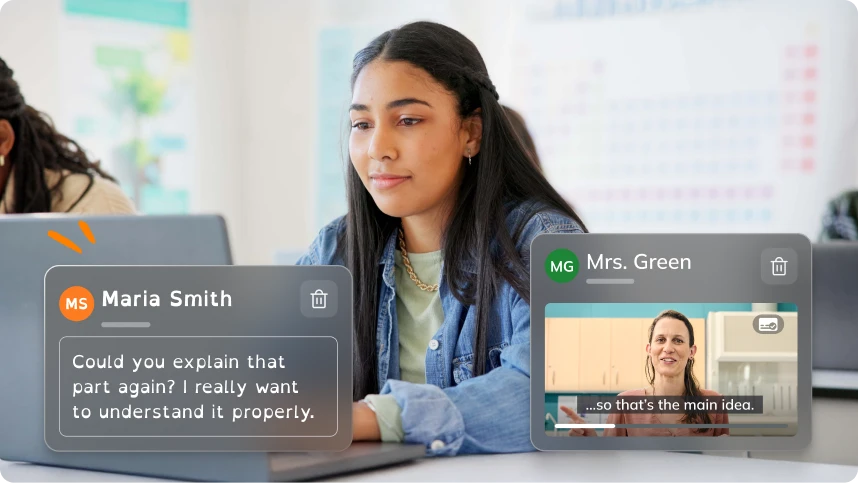
- Captioned Video Comments & Screen Reader Compatibility
Built-in captions and screen reader support ensure students with hearing or visual challenges can access the same content as their peers, without teachers creating alternate materials.Example: A teacher quickly enabled captions for a hard-of-hearing student, keeping the focus on learning rather than accommodations.
- Adjustable Font & Color Contrast
Customizable font sizes, spacing, and contrast settings support students with dyslexia, low vision, and processing differences. These adjustments help students engage independently and confidently.Example: A student struggling with text density increased spacing and contrast, allowing them to follow grade-level texts without teacher intervention.
2.4. AI That Puts Teachers First: Transparency Over Automation
The challenge
AI can be intimidating or feel like a replacement for teaching rather than a support.
Why it matters
Teachers need tools that enhance pedagogy, not undermine it, while maintaining trust and clarity about how AI is being used.
Kami solutions & classroom examples:
- Kami solutions & classroom examples
AI-assisted Feedback: Generates helpful suggestions for teachers while keeping instructional voice intact. - Transparent & Controlled
Teachers decide which AI tools to use, guaranteeing a safe and accessible use in the classroom.
3. From Tools to Transformation
Using Kami isn’t just about efficiency, it’s about changing how teaching and learning happen. Kilner recalls his early skepticism:
“At one point, I said we should avoid Kami because it felt like a worksheet factory. But Kami kept evolving, listened to teachers, and became a tool that supports real creativity, real differentiation, and real equity.”
Now, he’s one of its biggest champions. “If I had to choose one edtech tool to use for the rest of my life, it would be Kami,” he said. For him, it’s about giving teachers a voice, freeing their time, and making learning accessible to every student.
4. Why School Leaders Are Turning to Kami to Drive Equitable, Efficient, and Engaging Classrooms
Jeff’s journey makes one thing clear: innovation isn’t about adding more tools , it’s about choosing the ones that actually help teachers teach and students learn. Districts seeing real gains are using platforms like Kami to strengthen pedagogy, close equity gaps, and increase teacher capacity. When technology is aligned with instructional goals instead of adding to the workload, classrooms become more inclusive, more efficient, and far more engaging for every learner.
5. See Why Thousands of Schools Choose Kami
Join educators who are closing literacy gaps, reducing workload, and building more inclusive classrooms with Kami’s instructional platform — now enhanced with deeper modes of expression through Book Creator.
Learn more about Kami and Book Creator today.
This customer story reflects Jeff’s experience using Kami while working as the Instructional Technology Specialist for Delaware’s Indian River School District at the time of filming.
Blogs you may also like
An Educator’s Journey with Kami

Engaging every learner: How Kami transforms passive lessons into active learning
One platform, every learner: How Fond du Lac School District transformed digital learning with Kami