
Differentiated Instruction in Adult Education: How Kami Builds Student Confidence

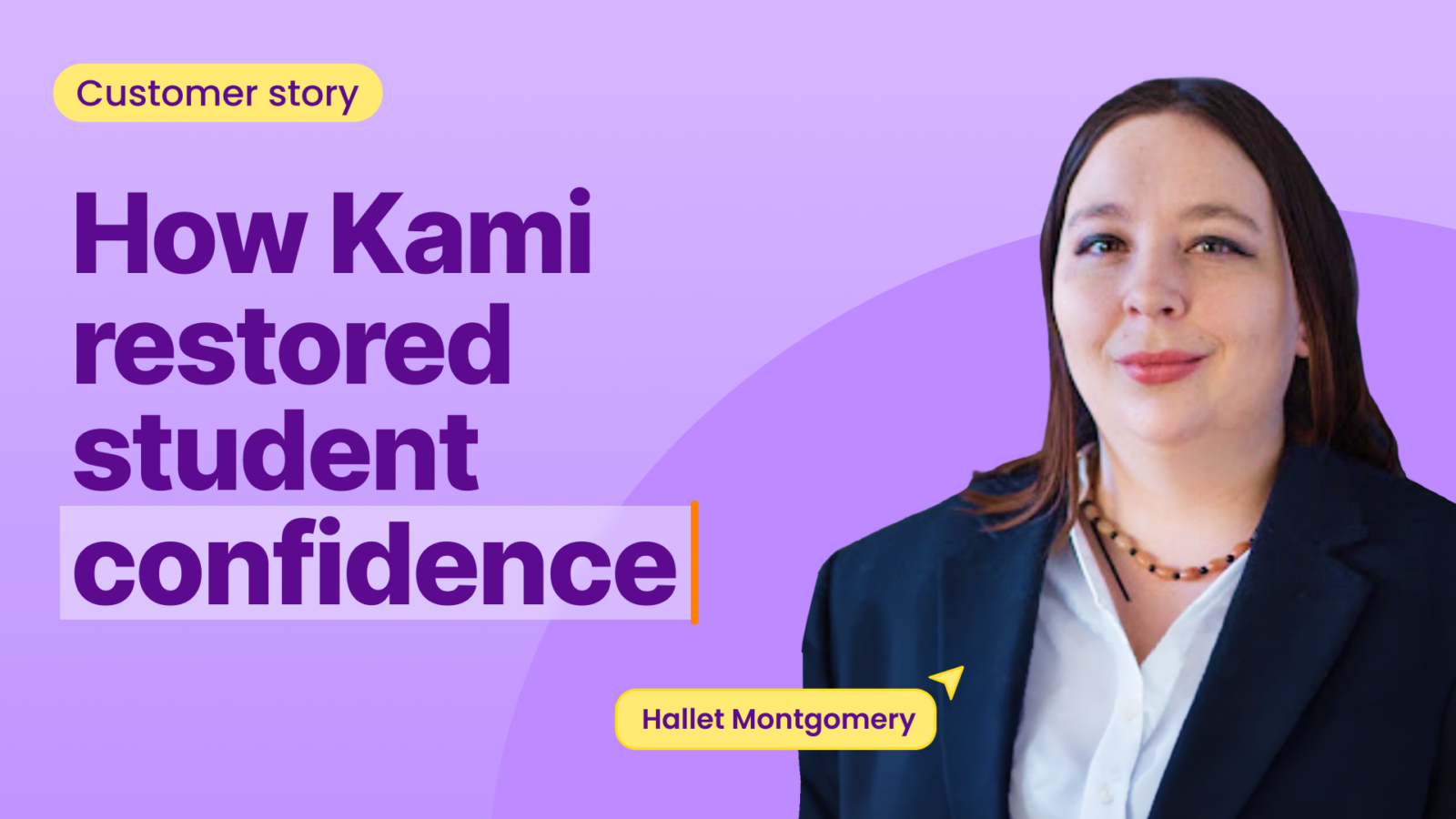

Every school system has learners that don’t fit the mould. Hallet Montgomery knows this better than most. Homeschooled her whole life, she earned her GED at 19 and spent years convinced that teaching – the thing she’d wanted to do since she was 14- simply wasn’t for her. Not because she couldn’t do it, but because the classrooms that existed didn’t have room for someone like her, or the students she’d eventually come to serve.
Today, Hallet teaches at Eastern New Mexico University-Roswell, working with students ranging from teenagers to retirees: people balancing jobs, families, and years of being told by one system or another that they were the problem.
On any given day, her classroom holds teenagers and grandparents, people who left school in fourth grade and people who left three months ago. Every single one of them is at a different level, with a different story, and the same hope that this time… it might actually work. In adult education classrooms, this is the reality every day.
The challenge of differentiated instruction in multi-level adult education classrooms
Differentiated instruction means teaching the same class at multiple levels simultaneously — adjusting content, pace, and difficulty to meet each learner where they are.
In adult education, no two students are at the same level. Before Kami, Hallet had to stop and re-teach the same lesson multiple times — at different levels — while other students waited. “It was exhausting – necessary, but exhausting,” she says. Learning in situations like this can be frustrating for everyone, and give students even more reason to not show up. Luckily, there is a solution
That’s the gap Kami closes. Kami personalizes the reading level and difficulty of each assignment to match a student’s skill level and readiness, without the student ever having to ask for help.

How AI -powered learning tools build student confidence without singling anyone out
Kami’s Understand tools are a set of AI-powered features that help students read, think, and work through content on their own. They give every learner personalized support that fits their learning profile; and puts the choice of how to engage with content in their hands.
The toolset includes:
- Explain, which breaks down difficult text and images
- Summarize, which condenses long content
- Translate, which works in over 100 languages
- Relevel, which adjusts the reading difficulty of any assignment to match a student’s level
All without raising a hand or waiting for the teacher. For Hallet’s multi-level classroom, Relevel is the game changer.
One student came in with documentation for learning accommodations but was adamant she didn’t want to be singled out, or receive any help other students weren’t getting. That student’s situation is what pushed Hallet to fully explore what Kami could do.
From barriers to independent learning: what personalized edtech looks like in practice
Hallet explains what using Kami is like for students:
First, there’s the blocker. The student opens the assignment and the reading level feels out of reach. Then there’s the helper. Hallet pulls up the Adjust tool and shows the student once. The student moves it themselves. The text shifts to match their level. She observes the look on their face. That moment isn’t unique to one student. Hallet sees it every time.
“I never hear from my students anymore that they can’t do it. They just say, ‘Hey, I need a little more time on this particular assignment. I’ll finish it tomorrow.’ And they always do — after they’ve scaled it.”
Hallet Montgomery, Adult Education
How auto-grading tools save teachers hours and keep adult learners engaged
For adult education teachers, getting a clear picture of student progress and being able to help students in a timely manner. Kami’s Questions AI is built directly into the Kami platform. It creates and grades assessments without a teacher ever leaving the tool. Teachers can turn any existing document into auto-graded questions — multiple choice, short answer, and more — or build new ones from scratch.
Once students submit, results appear instantly in Class View. Teachers get a live view of every student’s score and progress for real-time assessment and progress monitoring. For Hallet, that means she can see who is struggling before the lesson ends and step in right away.
Real-time assessment and instant feedback: the impact on adult learner motivation
When teachers move from manual grading to Kami’s Questions AI and Class View, the impact on time, stress, and student outcomes is immediate. Students see their scores the moment they hit submit, keeping student engagement and motivation high. Teachers see who is struggling during the lesson. And the time savings are significant — Hallet recently graded 10 assignments in under five minutes, a task that previously would have taken hours of manual labour.
“My students don’t have to wait for a score. They see it immediately and that helps motivate them because they know there’s a result coming and they’re excited.”
Can edtech reduce adult education dropout rates? What happened in one classroom.
Teaching in adult education requires understanding diverse needs and fostering engagement. Tools like Kami are about making learning easier and more accessible — not by lowering the bar, but by removing barriers and clearing a path to successful teaching and learning.
The results speak for themselves. Last spring, Hallet expected that about one third of her students would drop out–a pattern she had observed for years. Once she started using Kami, students began completing every assignment, everyday.
One student who previously took weeks to finish a single task submitted ten assignments in one afternoon — scoring the highest possible grade on every one.

School leaders are especially focused right now on return on investment, and justifying digital tools in the midst of questions about screen time. What often gets left out of these important conversations is how the right digital tools can assist teachers in improving student success and building healthier relationships to learning and the curriculum. And when that confidence and sense of pride raises scores and keeps students enrolled, it helps the school’s bottom line, too.
For Hallet, success is the look on a student’s face when they realise the thing that felt impossible this morning is finished by afternoon. The confidence and self-belief her students have built along the way. ‘The confidence, the pride, the sense of relief in accomplishing what on day one felt like the most impossible dream — there’s nothing like it in the world.’
Her one word for Kami’s impact: ‘Transformational.’
👉 See how Kami supports adult education classrooms. See Kami in action speak to us today.

Blogs you may also like
An Educator’s Journey with Kami

Engaging every learner: How Kami transforms passive lessons into active learning
One platform, every learner: How Fond du Lac School District transformed digital learning with Kami