

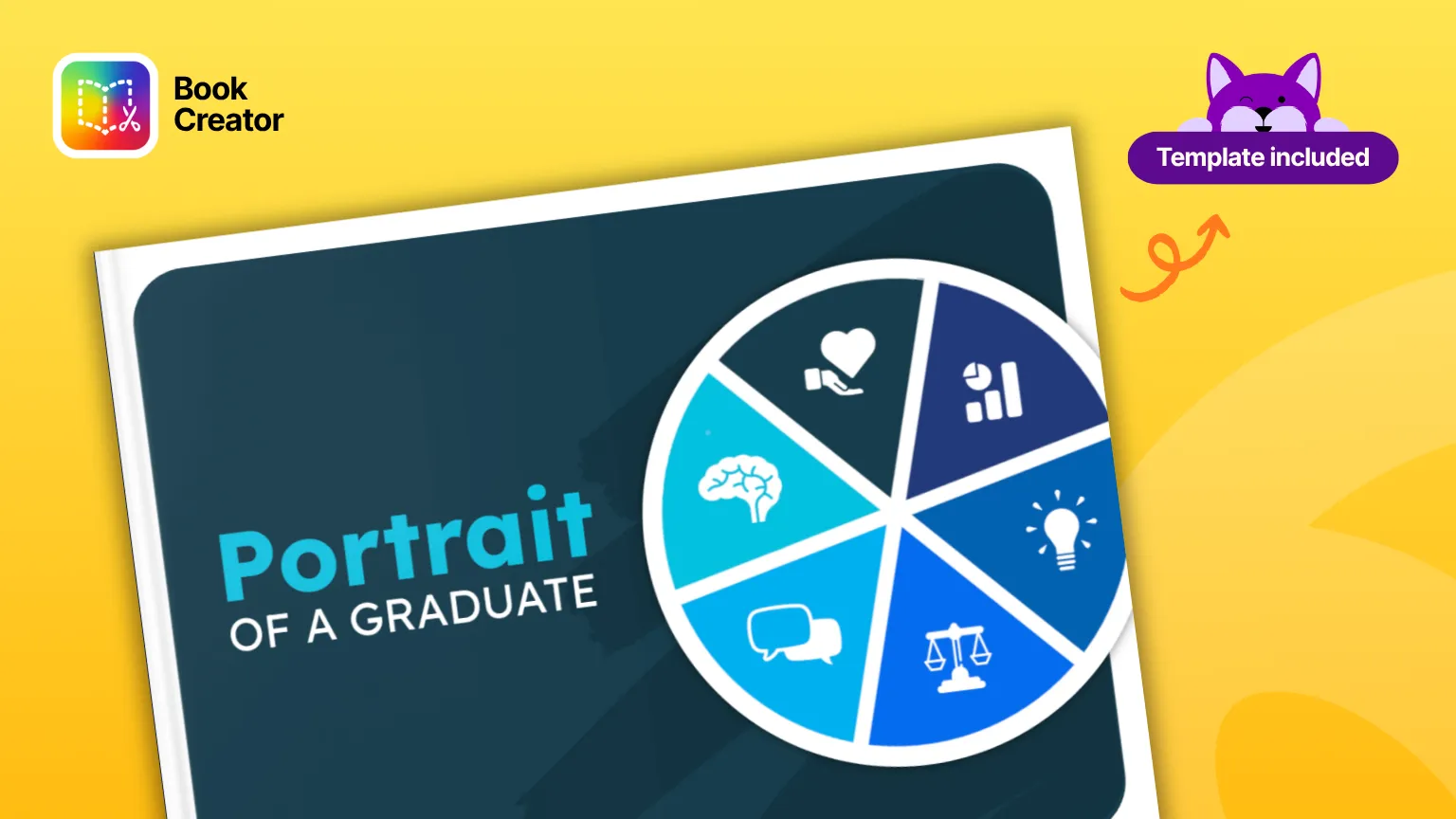

A district spends a year building its Portrait of a Graduate framework. Committees meet, competencies get named, a poster goes up in the front office listing traits like adaptability, collaboration, and critical thinking. Then a CTE or STEM coordinator gets asked, quietly, in a budget meeting: can you show me a student who actually demonstrates these. The honest answer, in most districts, is not really. Not because students aren’t developing those skills, but because nobody built a place to collect the evidence. This is where a portrait of a graduate portfolio comes into play.
That gap between the framework and the proof is where most Portrait of a Graduate initiatives stall. The competencies are defined. The evidence is not.
What a portrait of a graduate portfolio actually needs to do
A portrait of a graduate framework (sometimes called a profile of a graduate) names a small set of durable skills a district wants every student to leave with, alongside academic content knowledge. Common categories include communication, collaboration, critical thinking, adaptability, and civic or global awareness. The framework itself is aspirational language. A portfolio is what makes it verifiable.
For a portfolio to do that job, it needs to connect specific pieces of student work back to specific named competencies, not just collect work in general. A student’s reflection on a failed engineering prototype and the redesign that followed is strong evidence of adaptability and critical thinking. A recorded group presentation is strong evidence of communication and collaboration. The portfolio’s job is to make that connection explicit, so a reviewer doesn’t have to guess which competency a piece of work is supposed to demonstrate.
Why CTE and STEM programs are natural first movers on this
Career and technical education (CTE) and STEM programs already generate the kind of evidence a portrait of a graduate framework needs. Project-based work, team builds, industry-facing presentations, and documented failures and redesigns are the normal output of these programs, not an add-on. That’s different from asking a traditional academic class to retrofit portfolio evidence into an existing unit plan.
It also means CTE and STEM coordinators are often better positioned than anyone else in a district to pilot a portrait of a graduate portfolio, since the raw material already exists in their programs. A pilot here can become the model the rest of the district points to.
Building the portfolio without inventing a new system
The practical failure point isn’t disagreement about which skills matter. It’s the lack of a simple, consistent place for students to add evidence as it happens, tagged to the right competency, without a teacher having to build a tracking system from scratch.
In Book Creator, a student portfolio can be organized with a page (or section) per competency, where students add work samples, photos, short videos, or written reflections as they happen and connect each one back to the skill it demonstrates. Because pages can combine text, image, audio, and video, a student who struggles to write a strong reflection can record one instead, which matters when the goal is accurately capturing a skill like communication rather than measuring writing ability along the way.
Share our one-pager on a portrait of a graduate with your administrator.
Book Creator’s UDL Product Certification from CAST and its ISTE Seal of Alignment both speak directly to this kind of flexible, standards-aligned expression, which matters when a portfolio is meant to represent every student in a program, not just the ones who write comfortably.
What this looks like in practice
A student in a CTE robotics pathway builds a portrait of a graduate portfolio across a semester: a video of an early prototype failure tagged to adaptability, a recorded team debrief tagged to collaboration, a final competition reflection tagged to critical thinking. By the end of the semester, the coordinator has something a district committee actually asked for and rarely gets: named evidence, not just named intentions.
Where this fits in a broader career readiness picture
A portrait of a graduate portfolio works well alongside, not instead of, a broader career and college portfolio. See our post on what a career portfolio is for the foundational definition, and our post on a state-agnostic college and career portfolio for how these pieces come together into something a student can carry past graduation. See our post on documenting project-based learning for CTE credentials for a closer look at capturing this kind of evidence from CTE and STEM project work specifically.
If you want a starting point rather than a blank page, there’s a remixable Portrait of a Graduate portfolio template built by Dr. McGettigan and Dr. Berne.
For background on how districts are building these frameworks, the Battelle for Kids Portrait of a Graduate network is a widely referenced resource for districts drafting or refining their own. The Aurora Institute’s guidance on making a Portrait of a Graduate authentic and dynamic is a useful companion read on turning the framework into classroom practice.
Blogs you may also like
Employability skills are required. Proving them is the hard part.

What is a career portfolio?
Work-based learning happened. Where’s the record of it?