


Use this demo passage with the Kami Companion toolbar to see what students in Social Studies class may experience.
When the River Runs Dry
A 9th Grade Social Studies Reading Passage
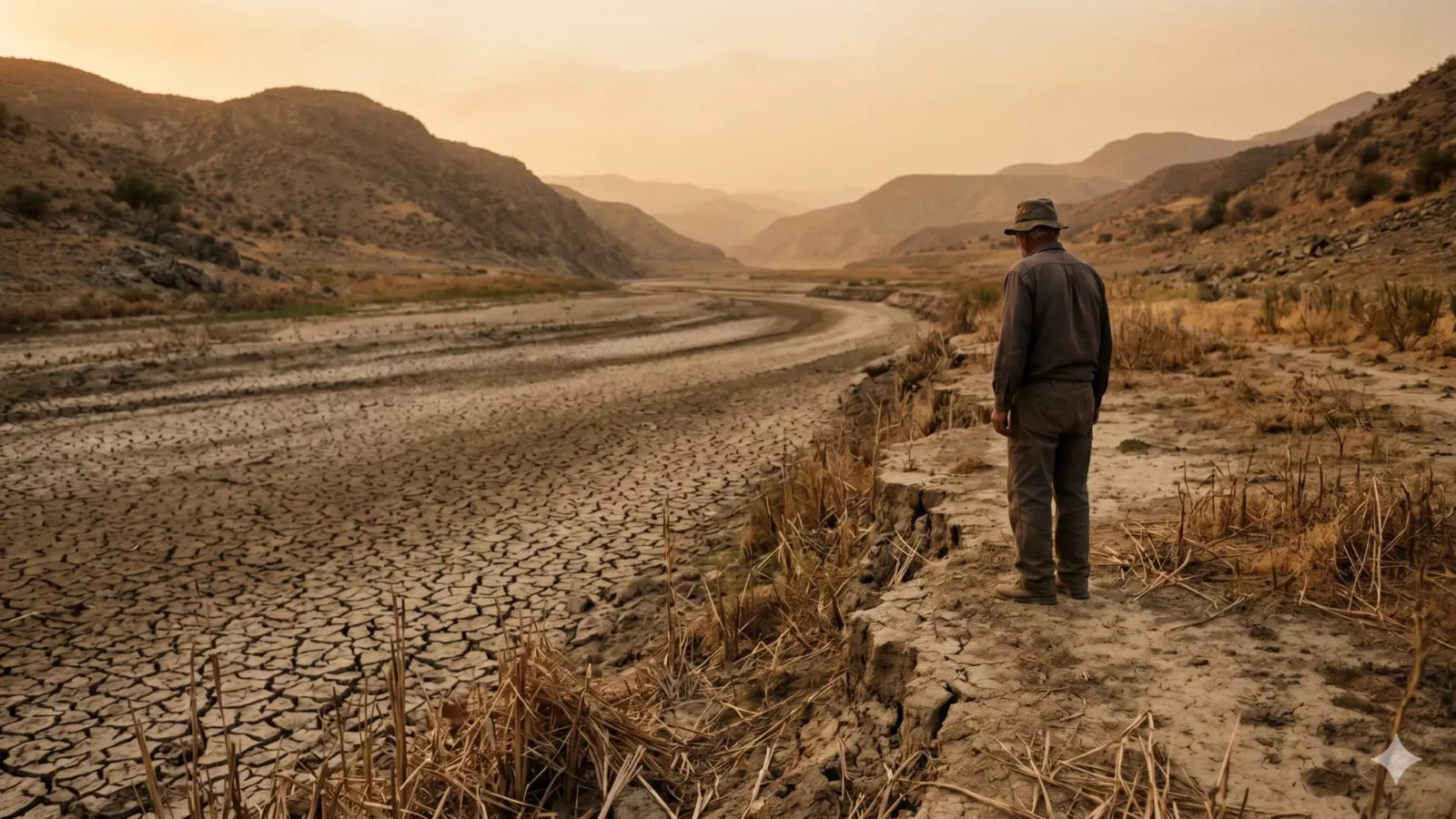
The river had always been there.
For the farmers in the valley below, it was not simply a water source — it was the boundary line between seasons, the rhythm that organized planting and harvest, the reason their grandparents had settled here rather than somewhere else. Children learned to swim in its shallows. Elders measured time by its floods.
But in the summer of the drought, the river slowed to a trickle. And then, for the first time in living memory, it stopped.
What followed was not just a water shortage. It was a crisis of governance.
The river crossed three provinces and two national borders before it reached the valley. Upstream, a growing city had expanded its irrigation systems to support a booming agricultural export industry. Dams, built decades earlier with international development funding, now retained water that had once flowed freely downstream. Each actor — the city planners, the dam operators, the national governments — had made decisions that were locally rational but collectively devastating.
This is what environmental scientists call a tragedy of the commons: a situation in which individuals or groups, each acting in their own interest, deplete a shared resource to the point of collapse. The concept was first articulated by economist Garrett Hardin in 1968, but the pattern it describes is ancient. Overfished coastlines, deforested hillsides, polluted aquifers — the tragedy of the commons has shaped the rise and fall of civilizations across every continent.
The challenge is not that people are selfish. The challenge is that shared resources require shared governance, and shared governance is difficult to achieve — especially across borders, languages, and competing economic pressures.
Some communities have found solutions. In parts of Spain, centuries-old water tribunals still convene weekly to allocate river water among farmers, using rules developed in the Middle Ages and refined through generations of negotiation. In Nepal, community-managed irrigation systems called kulo have sustained rice farming in mountain valleys for hundreds of years. In both cases, the key was not top-down regulation from a distant government, but locally accountable systems built on transparency and trust.
Back in the valley, the farmers began meeting in the evenings. They drew maps. They argued. They compromised. They sent a delegation to the city upstream.
It took four years. But the river began to flow again.
Want to see how Kami Companion supports UDL principles in practice? Download the Kami Companion UDL one-pager for a shareable overview you can bring to your next planning conversation or team meeting.
Google Gemini. (2026, May 18). A wide, cinematic shot of a cracked, dry riverbed cutting through a valley… [AI-generated image].https://gemini.google.com/
Blogs you may also like

Kami Companion in the English Classroom

Kami Companion in the Science Classroom

Kami Companion in the mathematics classroom