

A student finishes a job shadow day at a local engineering firm, writes two sentences about it for a class assignment, and the experience disappears into a folder nobody opens again. Six months later, that same student sits in front of a scholarship committee or a hiring manager and can’t produce a single piece of evidence that the day happened, let alone what they took from it.
A career portfolio is the answer to that specific failure. It’s a collected, organized record of a student’s skills, experiences, and work samples, built over time rather than assembled the week before it’s needed.
What is a career portfolio, exactly
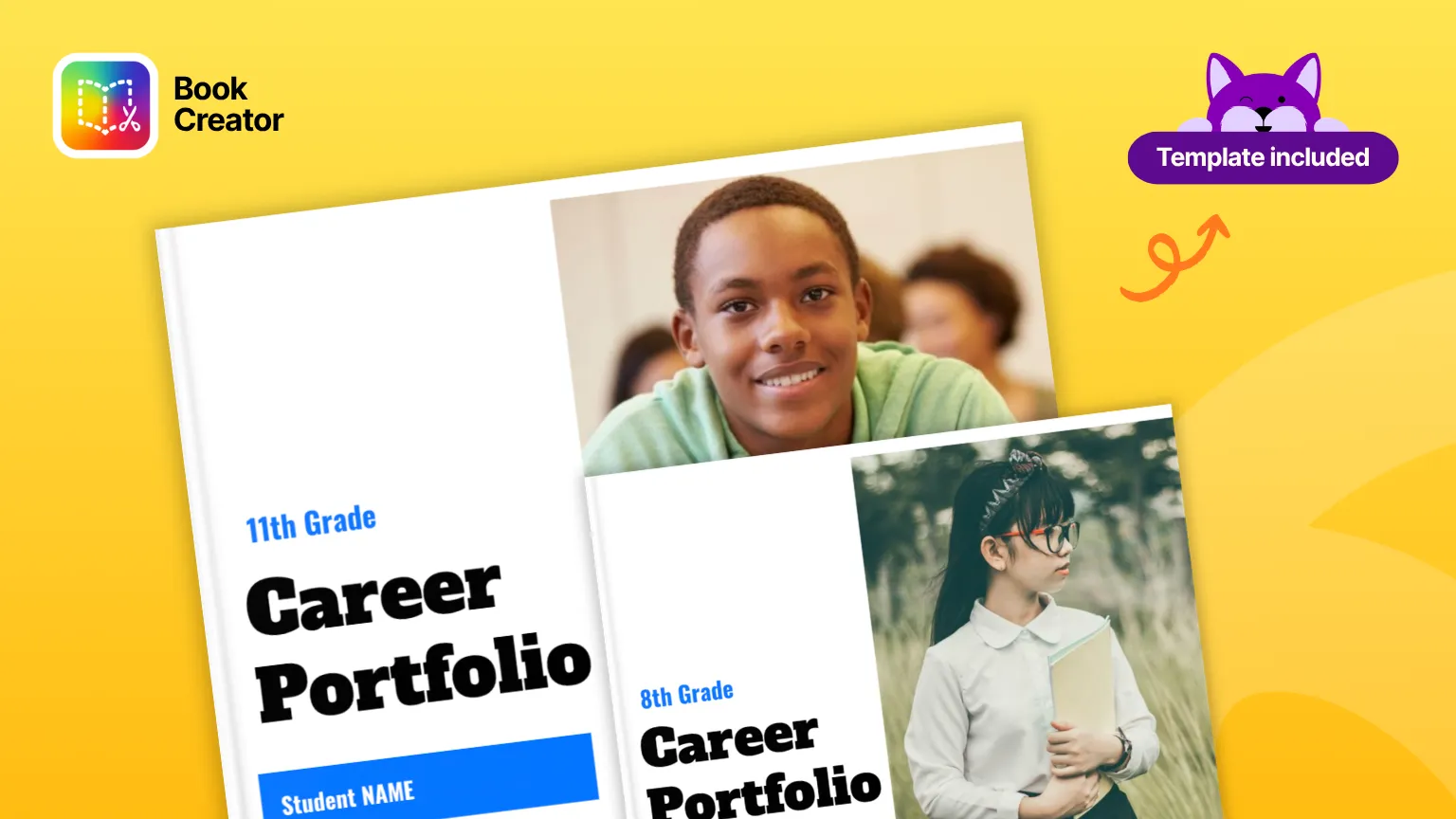
A career portfolio is a curated collection of evidence that shows what a student can do and has done, organized around career readiness rather than a single class or grade. It typically includes work samples (a project, a design, a piece of writing), documented experiences (internships, job shadows, competitions, certifications), and reflection (the student’s own account of what they learned and how it connects to a goal).
The distinction that matters most is between a portfolio and a resume. A resume is a list of claims: “completed a 40-hour welding certification,” “participated in a robotics competition.” A portfolio is the evidence behind those claims: the certificate itself, a photo and description of the robot, a reflection on what the student would do differently next time. Colleges, scholarship committees, and employers increasingly want to see the evidence, not just the list.
Why schools are building these earlier than they used to
Career portfolios used to live almost entirely at the college application stage, built in a rush during junior or senior year. That’s shifting for two reasons. First, career and technical education (CTE) programs and Perkins V reporting requirements ask programs to document student experiences, like work-based learning and credential attainment, as they happen, which naturally produces portfolio-ready material years before college applications start. Second, a portfolio built gradually, project by project, is simply better than one built retroactively. Students remember the reasoning behind a decision the week they made it. They don’t remember it senior year.
That earlier start also changes who owns the portfolio conversation. It’s no longer only a school counselor’s job during application season. CTE and STEM coordinators, who already sit closest to the work-based learning, credentialing, and project-based evidence that feeds a portfolio, are often better positioned to get the habit started early.
What belongs in one
A useful career portfolio usually includes a small, consistent set of elements rather than an exhaustive archive of everything a student has ever done:
A short student profile or introduction, work samples that demonstrate specific skills, documentation of experiences like internships, competitions, or industry credentials, and a reflection connecting the work to a career interest or goal. Fewer, well-chosen pieces with real reflection behind them tell a stronger story than a large, unsorted collection.
Building one without adding a new class period
The barrier most programs hit isn’t a lack of good student work. It’s the lack of a simple place to collect it as it happens, without asking teachers to build and maintain a new system alongside everything else they’re already tracking. Book Creator lets students build a portfolio the same way they’d build any other project: adding a page with a photo, a short video reflection, or a writing sample right after an experience happens, rather than reconstructing it from memory later.
In a survey of 1,961 teachers in June 2024, 93% said Book Creator helps students develop future-ready skills, and the tool holds the ISTE Seal of Alignment and CAST’s UDL Product Certification, so the place students build the portfolio is itself backed by the kind of independent review districts already look for.
Where career portfolios go next
Once a school has a working definition and a simple way to collect evidence, the next question is usually what the portfolio looks like for a specific persona, most often a student headed toward a career and technical pathway. See our career portfolios above, and our post on documenting project-based learning for CTE credentials for how the same evidence supports program-level reporting, not just individual students. If the strongest evidence a student has comes from an internship or job shadow rather than a classroom project, our post on work-based learning documentation covers capturing that specifically, and our post on the STEM portfolio built from eight challenges shows what this looks like starting as early as a single class project. And if your district has adopted a Portrait of a Graduate framework, our post on building a portrait of a graduate portfolio covers collecting evidence against those named competencies specifically.
For a broader look at how career readiness is being defined at the state level, see the Association for Career and Technical Education resource library, which tracks career readiness frameworks across states. The National Association for College Admission Counseling is also a useful reference for how portfolios are increasingly factoring into holistic college admissions review.
Blogs you may also like
The CTE credentials prove the test. What proves the work?

The gap between a Portrait of a Graduate and proof
Employability skills are required. Proving them is the hard part.