

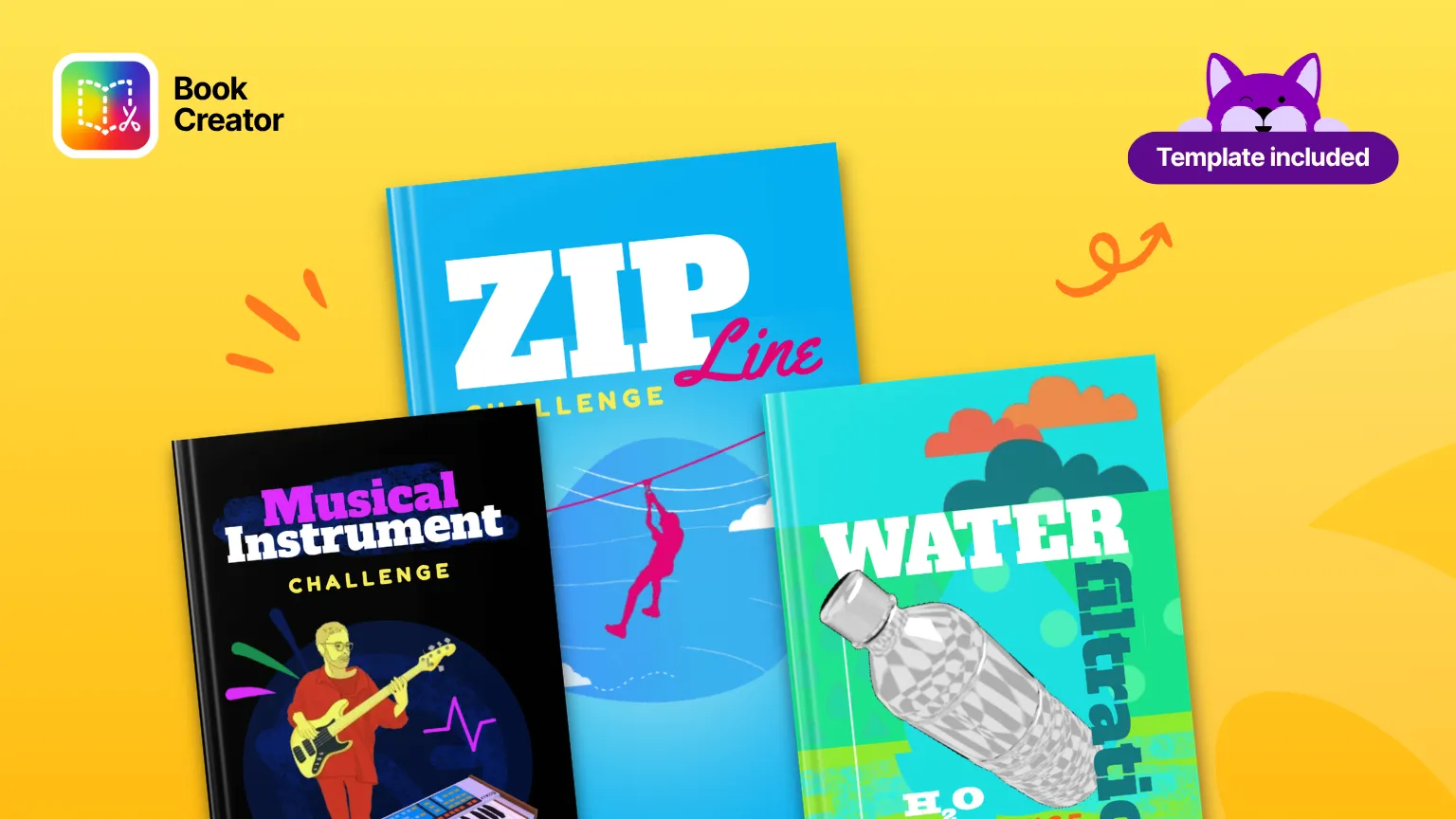

Hand a group of middle schoolers a zip line challenge, some string, cardboard, and a single roll of tape, and watch what happens. Nobody asks whether this is going to be on the test. They just start building, and when the first attempt fails, they start troubleshooting.
The best STEM activities for middle school work like that. They don’t need a lab budget or a dedicated makerspace. They need a real problem, a tight constraint, and enough time for a second attempt.
What makes a STEM activity worth the class time
Before the list, one filter worth applying to any activity you’re considering.
If every group’s finished object looks the same, it isn’t a design challenge. It’s a craft project with a science label. A real challenge produces different solutions to the same constraint, and those differences are what the class discussion is actually about.
The other test is whether failure is survivable. An activity where a collapsed prototype ends the lesson teaches students that mistakes are terminal. An activity built around iteration teaches the opposite, which is closer to how engineering works and considerably more useful to a 12-year-old.
What makes a STEM activity worth the class time
Before the list, one filter worth applying to any activity you’re considering.
If every group’s finished object looks the same, it isn’t a design challenge. It’s a craft project with a science label. A real challenge produces different solutions to the same constraint, and those differences are what the class discussion is actually about.
The other test is whether failure is survivable. An activity where a collapsed prototype ends the lesson teaches students that mistakes are terminal. An activity built around iteration teaches the opposite, which is closer to how engineering works and considerably more useful to a 12-year-old.
Seven STEM activities for middle school to try this term
Each of these runs the full engineering design cycle: define the problem, plan a solution, build a prototype, test it, then share the result. All seven are available as ready-made Book Creator notebooks, and all seven run on materials you can gather without a purchase order.
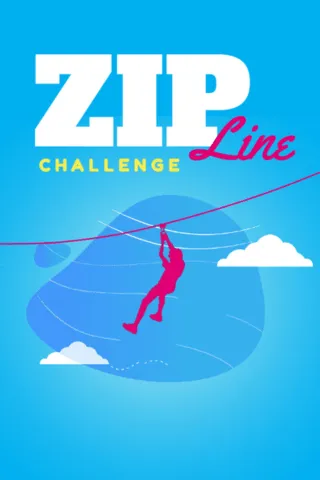
One: the zip line challenge. Students design a carrier that transports a small payload down a string without dropping it. The constraint is the payload weight and a fixed line angle. It teaches friction, gravity, and the trade-off between speed and control. Materials: string, cardboard, tape, paper clips, and a small weight.

Two: the parachute drop. Students build a parachute that slows a payload’s descent, measured by fall time or landing accuracy on a target. It teaches air resistance, surface area, and why a bigger canopy isn’t automatically a better one. Materials: plastic bags or tissue paper, string, tape, and a small weight.
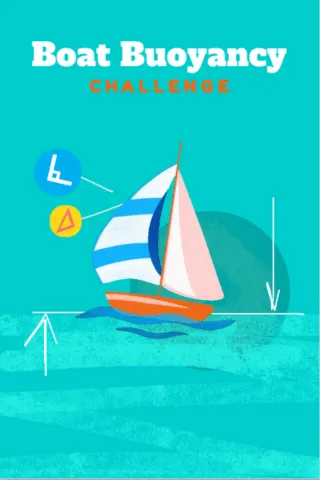
Three: the boat buoyancy challenge. Students design a hull that floats and then carries as much cargo as possible before it goes under. It teaches density, displacement, and the difference between floating and floating with a load. Materials: aluminum foil, modeling clay, straws, tape, a tub of water, and pennies or washers for cargo.
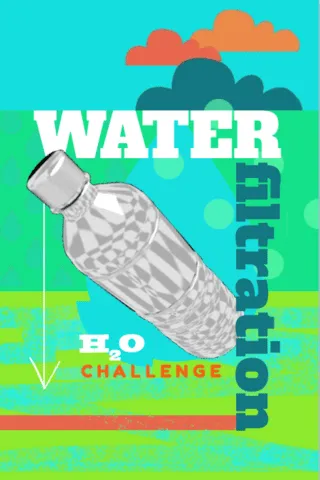
Four: the water filtration challenge. Students build a filter that clears sediment from dirty water using layered materials, then test clarity against other groups’ designs. It teaches material properties, filtration, and the difference between clear and clean. Materials: plastic bottles, gravel, sand, cotton, coffee filters, and a jug of muddy water.
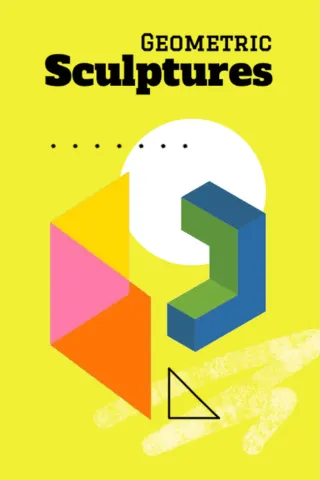
Five: the geometric sculpture challenge. Students construct a freestanding sculpture that meets a minimum height while using a limited number of pieces. It teaches structural stability, triangulation, and load distribution. Materials: straws, toothpicks, marshmallows or modeling clay, and tape.
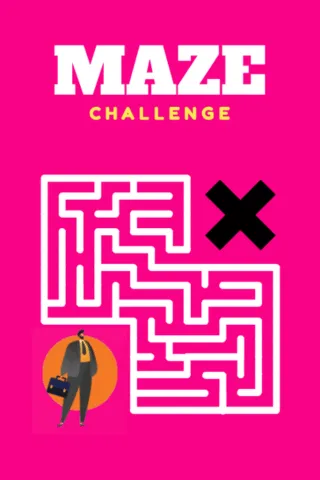
Six: the maze challenge. Students design a maze that guides a marble from a start point to a finish without it leaving the track, then hand it to another group to test. It teaches spatial reasoning, angles, and iterative refinement, and the peer test makes design flaws obvious fast. Materials: cardboard, cardstock, straws, tape, and marbles.

Seven: the musical instrument challenge. Students design an instrument that produces at least three distinct pitches, then explain what changes the pitch. It teaches sound waves, frequency, and resonance. Materials: rubber bands, boxes, jars, water, and recycled containers.
How these STEM activities for middle school connect to standards
Activities built around the engineering design process map to the Next Generation Science Standards (NGSS) engineering design performance expectations for grades six through eight, the MS-ETS1 set.
Defining a problem precisely, including its criteria and constraints, is the substance of MS-ETS1-1. Evaluating competing design solutions against jointly developed criteria is MS-ETS1-2, and it’s the one most often skipped, because it requires students to compare their design against someone else’s rather than only iterating on their own. Testing a solution and modifying it based on the results is MS-ETS1-4. There’s a parallel set of engineering design expectations for grades three through five, which is part of why the same activity structure works across grade bands.
That alignment means these aren’t a break from standards-based instruction. They’re standards-based instruction, delivered through a problem students want to solve. Worth checking exact performance expectation language against your state’s adopted standards, since not every state uses NGSS as written.
Running a STEM activity for middle school when you don’t have a week
Most teachers meet a list like this and immediately calculate that there isn’t time. There usually is, if the scope is set honestly up front.
In a single period, run one build and one test. Skip the second prototype and spend the last ten minutes on a whole-class discussion of what failed and what students would change. The revision happens in conversation rather than in cardboard, which is less satisfying but still does most of the cognitive work.
Across two periods, use the standard shape: build and test on day one, revise and retest on day two. This is the minimum for students to experience iteration rather than hear about it, and it’s the version worth protecting if you can only protect one thing.
Across a week or a program block, add the parts that usually get cut. Students research the problem before designing, document each attempt, evaluate another group’s solution against shared criteria, and present to an audience outside their own group. This is where an activity stops being an activity and starts being a project.
Managing groups and materials
Two practical notes that save more trouble than they look like they should.
Assign roles that rotate rather than letting groups self-organize, because self-organizing groups reliably hand the building to the student who’s done it before and the recording to everyone else. Rotating a materials manager, a recorder, and a tester across activities spreads the hands-on experience to the students who need it most.
Ration materials deliberately. Giving each group exactly ten straws rather than an open bin isn’t stinginess, it’s the constraint that forces planning. Groups with unlimited supplies build by trial and error and never articulate a design.
Documenting the process with Book Creator
STEM isn’t only about the build. It’s also about explaining a decision, reflecting on what changed between attempts, and sharing a result with an audience. If the only artifact is the object, the reasoning disappears the moment the object gets recycled.
Book Creator gives students a place to turn any of these activities into a record of that thinking: recording a video walkthrough of a prototype, annotating design sketches with the pen tool, adding an audio reflection on what changed and why, and publishing the finished notebook to share with classmates, teachers, or family at home. For students who build confidently but write reluctantly, being able to explain a design out loud is often the difference between demonstrating understanding and appearing not to have any. Book Creator holds the ISTE Seal, which speaks to how the tool supports this kind of active, student-driven work.
It also gives you something to assess besides the finished object. A group whose sculpture collapsed but who documented three clear hypotheses about why has done better engineering than a group whose sculpture stood and who can’t explain what made it work. Without a record, those two groups look identical.
There’s an eighth challenge in the collection worth knowing about if your building has a printer or a makerspace: a 3D printing challenge, which adds fabrication and tolerance to the same design cycle. It’s left off the list above only because it needs equipment the other seven don’t.
The same documentation approach pairs well with the 5E instructional model during regular science instruction, so students aren’t learning a new format every time they investigate something.
Bringing an activity into your program
Pick one activity from the list that matches the materials already on hand and the time you actually have, whether that’s a single class period, a week of an afterschool program, or a summer enrichment block. Let students run the full cycle, including the part where the first prototype doesn’t work, and have them document it somewhere they can share afterward.
Then resist the urge to rescue a struggling group too early. The troubleshooting is the lesson.
See Book Creator’s STEM challenge collection to find a ready-made notebook for your next activity.
Blogs you may also like
Your March Classroom Activities, Planned


Summer Reading Resources: Journals, Author Studies, and More
April Classroom Resources: End-of-Year Energy That Actually Inspires