
Reading fluency, built on visible practice
Kami helps students practice sound mapping, oral reading fluency, and comprehension. Teachers get a clearer view of where reading practice is happening.
Why reading practice is hard to see
Skilled readers need to recognize words and understand language. Neither skill grows through guessing.

Guessing looks like reading, until it doesn't
Some students guess at new words from pictures or the first letter. They can sound like strong readers, but they never learn to decode.
Finished isn't the same as understood
A finished passage shows that a student reached the end. It doesn’t show where they stumbled or reread.
Fluency needs a voice, and time to hear it
Students build fluency by listening, repeating, and getting feedback. But a teacher can’t sit with every student while they read aloud.
Real literacy outcomes
Built to make reading practice visible
Kami brings decoding, fluency, and comprehension practice into one workspace. Reading growth shows up in everyday work, not just the final score.
Practice, out loud, on the page
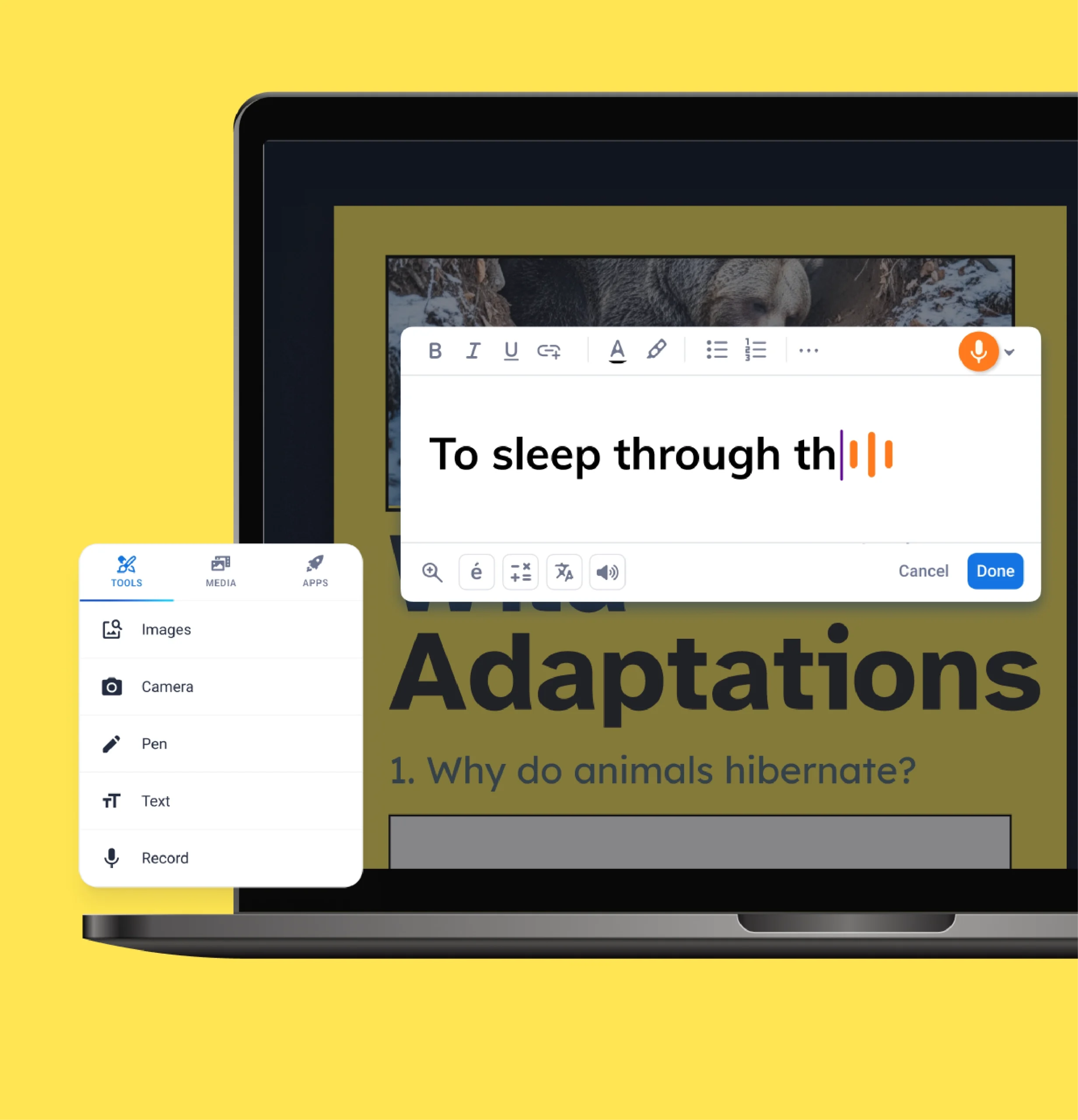
Students annotate, record, and respond right on the text. Teachers see the thinking, not just the final answer.
Build knowledge, then show it
Vocabulary and background knowledge grow alongside decoding. Students get more than one way to show what they understood.
Same text for every student
Reading and language support stays with the text. Students can work through grade-level material without a separate, simpler version.
Literacy practice in the classroom
Knowledge, built page by page
Students combine images, audio, and text to build the words and background knowledge they need to understand what they read. Then they explain a new topic aloud, which builds fluency and understanding.
Mapping sounds to letters
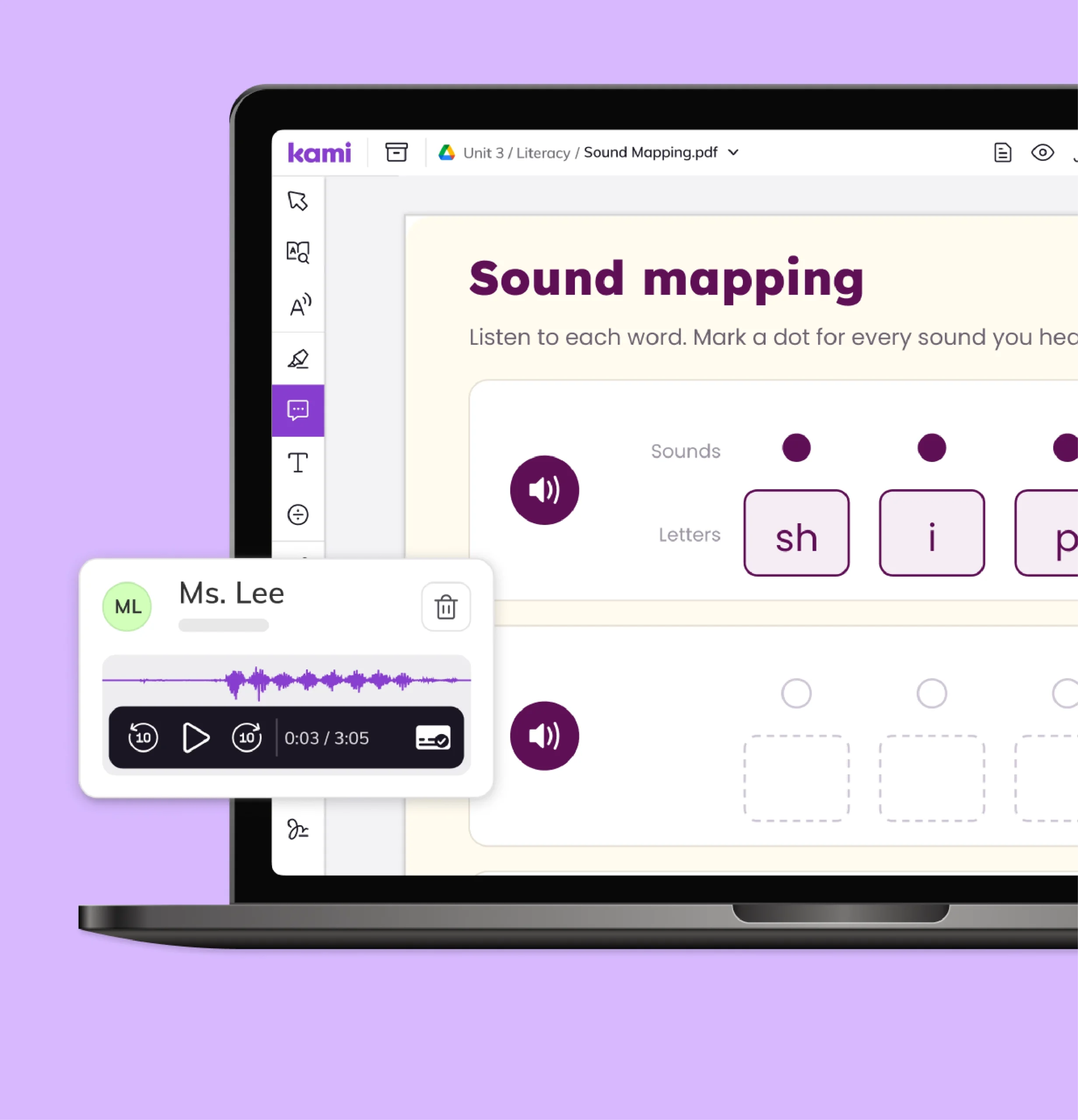
A teacher builds a sound-mapping task directly on a digital worksheet, having students mark a dot for each sound they hear, then write the matching letter. The same annotation tools support oral reading fluency, letting a teacher model a passage and a student record their own reading to self-correct.
Support that stays with the text
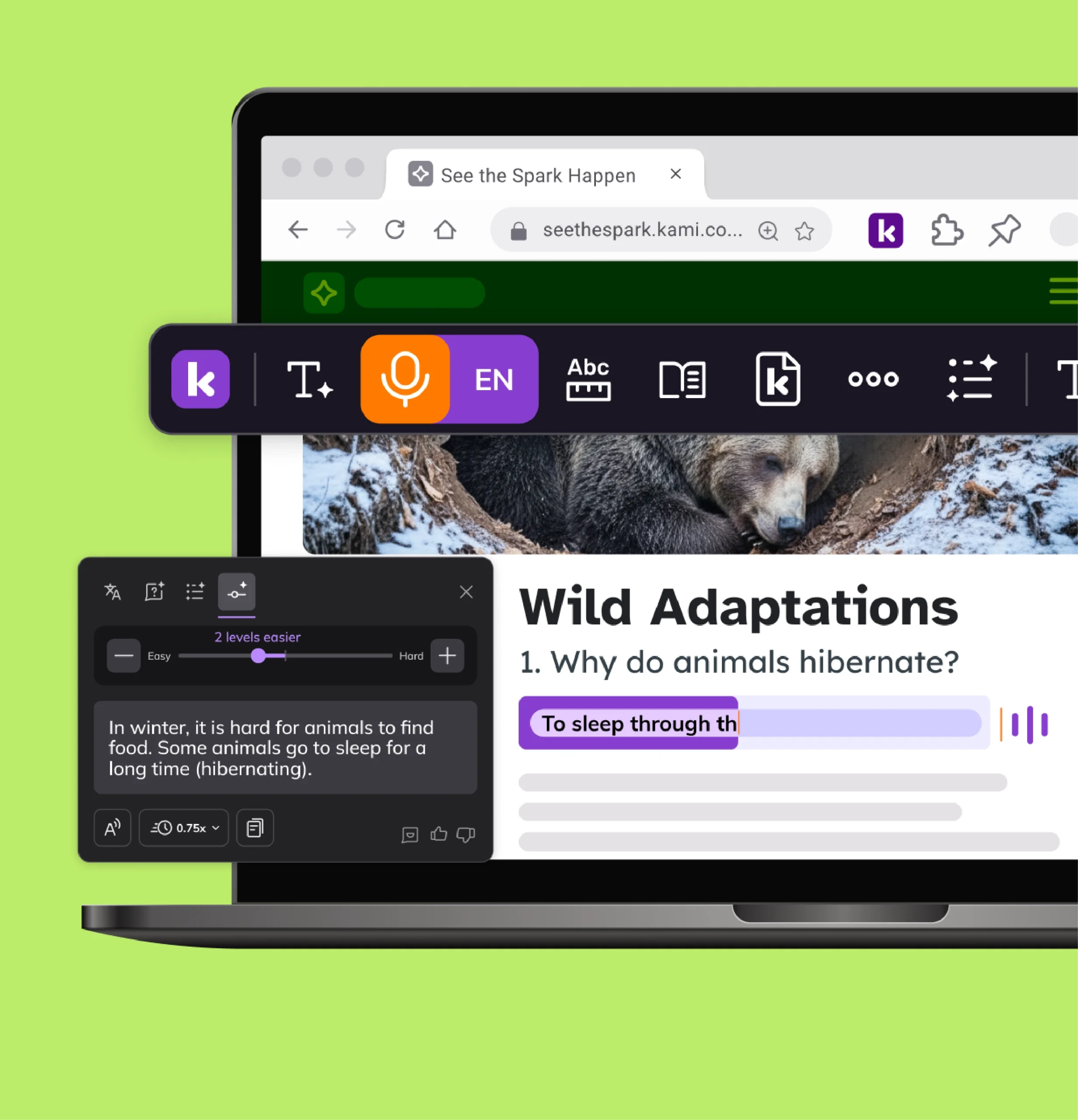
Read aloud and adjustable reading levels support comprehension for developing readers while decoding skills are still being built, without moving a student onto a separate, simplified text.

Reading gains backed by independent research
Moreno Valley Unified serves 34,000 students. An independent Empirical Education study links daily Kami App use to a 4 percentile point gain in reading, and 8 for multilingual learners.
Trusted by 50+ million teachers and students worldwide

Frequently asked questions
Browse our FAQs below, or visit our Help Center for comprehensive guides and troubleshooting support.
Does Kami support Structured Literacy instruction?
Kami gives teachers and students a workspace for explicit practice in phonemic awareness, phonics, fluency, vocabulary, and comprehension. It supports that instruction rather than replacing it. Kami App and Book Creator are built for this, in the spirit of the approach described by The Reading League.
How does Kami support reading fluency?
Kami App lets a teacher model a passage and a student record their own oral reading, so fluency practice can be heard, reviewed, and improved over time instead of only assessed live.
Is there research behind Kami's literacy claims?
An Empirical Education study of more than 15,000 students in Moreno Valley Unified School District found a 4 percentile point gain in reading scores with daily Kami App use, and 8 percentile points for multilingual learners. Book Creator holds Every Student Succeeds Act (ESSA) Level III evidence. See the efficacy research for the full write-up.
Does Kami replace phonics or decoding instruction?
No. Kami gives students a workspace to practice skills a teacher is already teaching. See Kami App for how teachers set up practice.
Can a student with dyslexia use Kami App and Book Creator for literacy instruction?
Yes. Both include dyslexia-friendly fonts, read aloud, and multimodal response options. See the accessibility page for current conformance documentation.
How does Kami fit with state requirements for evidence-based reading instruction and screening?
More than 40 states now require some form of early reading or dyslexia screening, and many require evidence-based instruction (NCSL overview). Kami isn’t a screener or a core reading program. It gives students a place to practice and supports students identified through screening, alongside the program a district already uses. See Kami Companion.
Evidence of reading growth your district can stand behind