


The night before the first day of school, most elementary teachers aren’t thinking about pacing guides. They’re thinking about the two dozen new faces who’ll walk through the door in the morning and how quickly they can turn “stranger” into “my class.” That work, the relationship-building, the routine-setting, the culture-building, is exactly what back to school activities for elementary students are supposed to do, and it happens in the first days and weeks, not the first unit.
The good news is you don’t have to build them from scratch. Below is a full set of ready-to-remix templates, some in Book Creator and some in the Kami App, organized by what they’re actually for: getting to know your students, orienting them to your school and class, supporting students who need extra structure and predictability, and building the kind of classroom community that carries a group through the whole year.
Get-to-know-you activities for the first days of school
These are the templates built for day one, when the goal isn’t content, it’s connection.
In Book Creator, students can build a page-by-page profile of themselves that goes well beyond a worksheet, since they can record their own voice, add drawings, and revise as they get more comfortable with the tool:
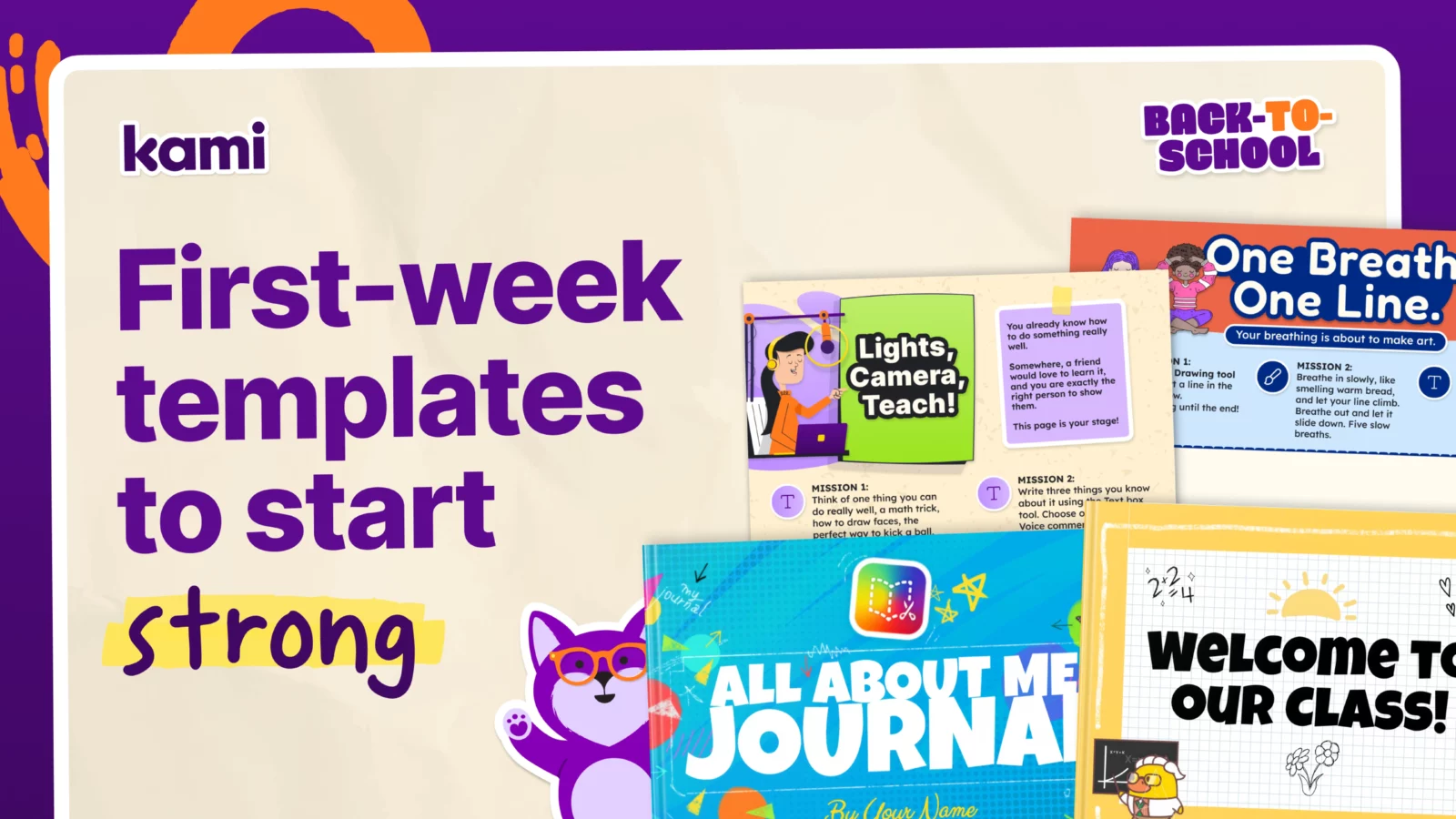
- All About Me Journal: a customizable journal where students introduce themselves through photos, drawings, and short recordings, including prompts like “something that makes you smile” and “one of my hidden talents.”
- Newcomers: All About Me: built specifically for multilingual newcomers, with translation support built into Book Creator so students can introduce themselves in their home language while the class (and you) can read it in English.
Why We Love It: the newcomer version solves a real problem. A student who doesn’t yet speak much English can still tell you who they are on day one, instead of waiting until their English catches up.
In the Kami App, a few templates do similar work for classes that are working from shared documents rather than individual books:
- All About Me for students: an editable student introduction sheet you can adapt to your grade level.
- Meet the Teacher: flip the script and introduce yourself, which matters more than it sounds like it should. Students (and parents) want to know who’s in charge of their kid’s year.
- Say My Name: a simple activity focused on getting names right from the start, phonetically and respectfully.
More back-to-school books to remix in Book Creator
Once the introductions are done, these templates help students settle into your school and your routines.
School Tour Notebook: Teacher Guide: a set of remixable notebooks that introduce students and families to key spots and staff around the building, with room for photos, audio messages, and translated vocabulary.
- Welcome to Our Class: a class handbook covering the teacher profile, weekly planner, classroom photos, and a rotating “student of the week” spot.
- Vocabulary Notebook: a teacher guide built around the science of reading’s five pillars, with page templates elementary teachers can adapt for building and reinforcing vocabulary all year.
- Back to School Night: a shared, collaborative book where every teacher in a grade or school adds their own page, so families who couldn’t make back to school night still get the introduction, the syllabus, and the classroom expectations.
More than 250 million books have been created in Book Creator, and a good share of them start exactly here, at the beginning of the year, before a single lesson has been taught.
Social stories that help every student feel ready
Some students need more than a welcome book. They need to know, in concrete and predictable terms, what recess looks like, what the hallway rules are, and what their day will actually contain. Social stories are especially useful for students with disabilities and other learners who do best with clear, repeatable expectations, but honestly, most six-year-olds benefit from a walkthrough of what to expect.
All four of these are remixable in Book Creator and designed to be personalized with your own school’s photos:
- Social Story: Recess
- Social Story: Hallway Rules
- Social Story: My Daily Schedule
- Social Story: Back to School
Swap in photos of your own playground, hallways, and classroom, and these go from generic to genuinely useful in about 10 minutes.
Goal-setting and progress-tracking activities
Community and comfort matter first, but elementary students can start owning their own learning earlier than most people expect. These two Kami App templates give students a simple, visual way to do that from the first weeks of school:
- Track Your Learning: a running record students update themselves, so progress becomes something they can see rather than something a teacher tells them about after the fact.
- Goal Setting: a template for setting and revisiting personal goals, useful as a first-week activity and again at each grading period.
The Kami App is built for exactly this kind of moment, turning a shared document into something students actively work through and reflect on, not just fill out once and forget.
Community-building activities for the first weeks
Culture doesn’t happen because you announced it does. It happens through small, repeated moments where students learn something about each other. These Kami App templates are built for that:
- Roll Chat: a dice-based conversation starter, useful for morning meetings or as a five-minute filler that actually builds relationships.
- Classroom Fun Facts: a lighthearted way for students to share quick facts about themselves and find things in common with classmates.
- Morning Meeting Template: a structure for a daily morning meeting, one of the most consistently recommended practices for building relationships with students in the first week of school.
Calm and focus activities for secondary classrooms
Students carry a lot into the first weeks of school, new schedules, new social dynamics, and new people. A minute of genuine calm isn’t always easy for this age group with back-to-school excitement.
These work best framed as tools students choose to use, not a mandatory calm-down corner. Treat these as legitimate strategies worth having in their own toolkit, the same way you’d introduce any other study skill.
- Sound catcher: students practice active listening with the Kami Calm Compass video by using text and drawing tools to identify natural and human-made sounds, and inventing a setting where they belong.
- One Breath, One Line: a breathing exercise where students use the Kami Drawing tool to create a single, continuous line that rises and falls with five slow breaths.
- The Museum of One: students use the Add Media tool to select a famous artwork, draw a museum room to display it, and explain their masterpiece selection using a Voice comment.
- Lights Camera Teach!: a personalized page where students name the specific conditions that help them concentrate, something they can return to whenever a task isn’t landing.
- Text to Future Me: students reflect on the upcoming year by sending a message to their future selves, utilizing Kami tools to document their hopes, anticipated personal changes, and questions.ed.
Getting students comfortable with the tools first
Every template above assumes students already know their way around the tool they’re using. That’s worth a few dedicated minutes before handing out the get-to-know-you journal or the vocabulary notebook, especially for any student who hasn’t used Kami or Book Creator before.
- Getting Started with Kami for Students: a student-facing walkthrough of the core Kami App tools, built to run before students are expected to complete assignments independently.
- Teach Your First Lesson: Teacher Guide: grade-by-grade lesson plans, from kindergarten through grade 12, for introducing Book Creator itself: logging in, joining a library, recording audio, and using the pen tool, among other things. Pick the lesson for your grade band and run it before assigning any of the books above.
A few minutes here saves a lot of “how do I do this” interruptions once students are actually working on their journal or notebook.
How to make these your own
None of these templates are meant to be used exactly as they arrive. That’s the point of building them in Kami and Book Creator instead of handing out a printed packet. Swap in your own school’s colors, add a photo of your actual classroom instead of a stock image, record a short welcome message in your own voice, and adjust reading level up or down for your specific group. A second grade class and a fifth grade class shouldn’t get the same All About Me journal, and they don’t have to.
It’s also worth building in a few minutes to model each template before students work independently. Project the Roll Chat template and run one round as a class. Read through a social story together on day one before expecting a student to use it independently later in the week. The templates do the heavy lifting of planning, but the first walkthrough still belongs to you.
Where to start
If you only pick three things from this list, make it an All About Me template for day one, a social story for any student who needs extra predictability, and a morning meeting or Roll Chat routine to run every day for the first two weeks. Everything else can be layered in as the year settles.
Teaching an older grade band too? Check out our back-to-school activities for secondary students for get-to-know-you activities, portfolios, and more, built for a middle and high school audience.
Ready to see everything in one place? Browse the full Kami library or explore Book Creator templates to find more back to school activities for elementary students, plus templates for the rest of the year.
Blogs you may also like
Your March Classroom Activities, Planned


Summer Reading Resources: Journals, Author Studies, and More
April Classroom Resources: End-of-Year Energy That Actually Inspires