
How to deepen student thinking with the Cycle of Learning


A student answers “What is photosynthesis?” correctly on Friday’s worksheet. The following week, you point to the plant thriving on the windowsill and the one dropping leaves across the room, then ask why one plant is doing better than the other. The student looks at the plants, then back at you, unable to give an in-depth answer.
It’s tempting to see this as a student who wasn’t paying attention or a worksheet that wasn’t rigorous enough. Usually, it’s neither. The student learned the basics well enough to complete a worksheet, but not deeply enough to explain how those parts work together.
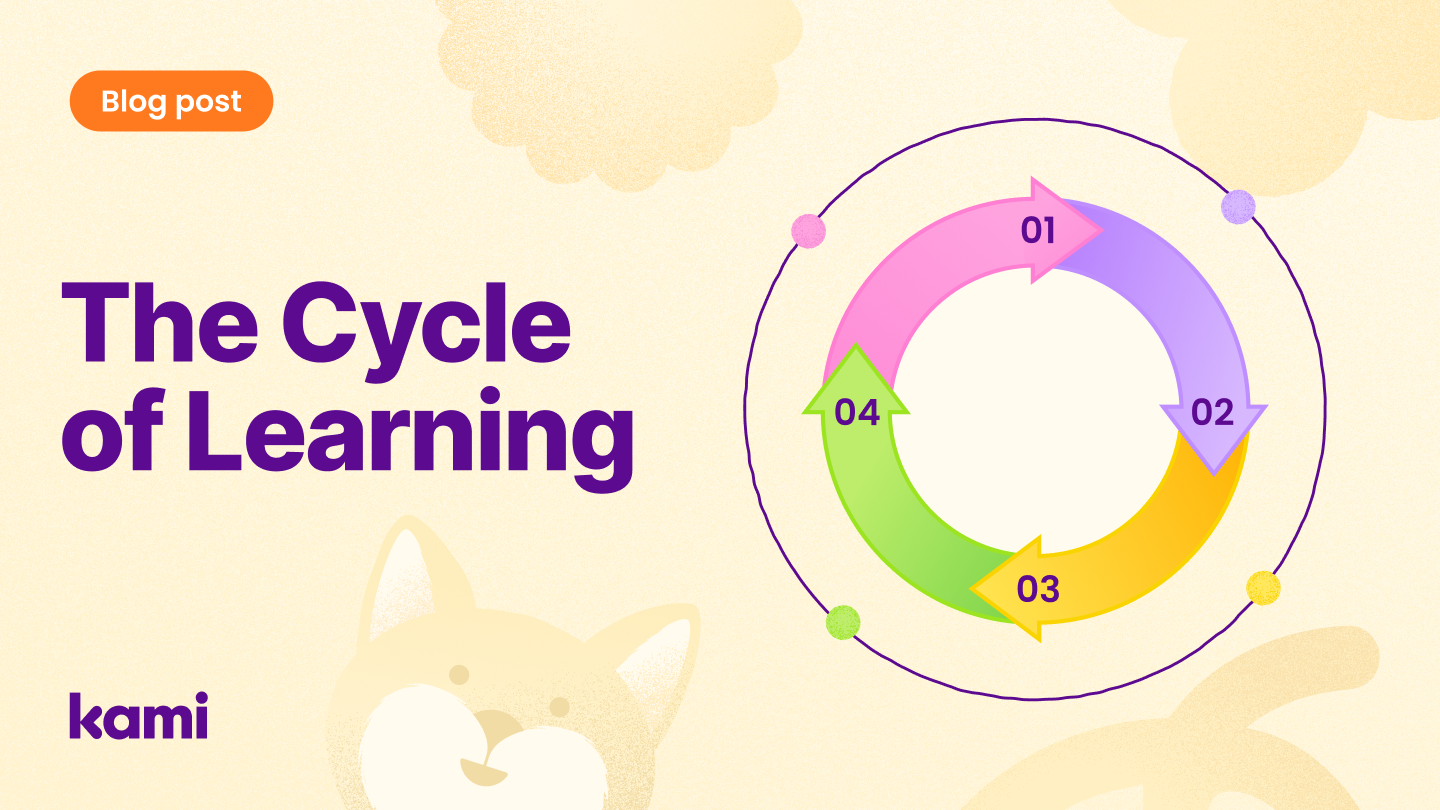
Most educators recognize this disconnect immediately, and closing that gap is the exact purpose of the Cycle of Learning.
Deeper thinking builds over time. It happens when each task asks students to carry their thinking forward and build on what they learned last week.
Webb’s Depth of Knowledge framework maps that progression across four levels of thinking, from recalling a fact to building something new with it. The Cycle of Learning turns those four levels into phases you can plan around.
No single tool carries the whole cycle, and most tools support more than one phase. The Kami product suite supports the full progression by keeping access, thinking, feedback, and creation connected.
The four phases of the Cycle of Learning
Phase 1: Foundation (DOK 1)
Identifying facts, defining terms, and following basic steps. (Thinking: “What is it?”)
Phase 2: Connection (DOK 2)
Comparing ideas, organizing information, and applying rules. (Thinking: “How does it work?”)
Phase 3: Strategic Thinking (DOK 3)
Analyzing evidence, justifying decisions, and solving multi-step problems. (Thinking: “Why does it matter, and how do I prove it?”)
Phase 4: Extended Thinking (DOK 4)
Synthesizing multiple sources, conducting long-term research, and designing original solutions over time. (Thinking: “How do I build something new with this?”)
Each phase describes the kind of thinking a task asks for, not how hard it is. Read more on difficulty vs. complexity in DOK in our Kami article Demystifying Depth of Knowledge (DOK): A Practical Guide for Educators
Why the Cycle of Learning framework is worth your time
- It stops learning from being single-use.
Most assignments end when they’re submitted. The Cycle of Learning gives you a way to build each piece of work on the last, so students reason with what they already worked out instead of starting from a blank page every time. - Understanding transfers.
A student who has only recalled a fact can answer the question they practiced. A student who has reasoned with it can answer one they haven’t seen before. That’s the difference between a class that does well on the unit test and one that still has it in March. - Progress becomes visible to students, not just to you.
A grade tells a student the work is finished. Seeing their own thinking develop across four phases tells them something more useful: that understanding is something they built and can build again.
The Cycle in practice: One photosynthesis unit
Here is how a single unit on photosynthesis moves through all four phases of the learning cycle.
Phase 1: Building the Foundation (DOK 1)
Students start with the basics. They read the text, identify key terms, and map out the core components of photosynthesis. This builds the vocabulary that deeper learning depends on.
How it works in practice:
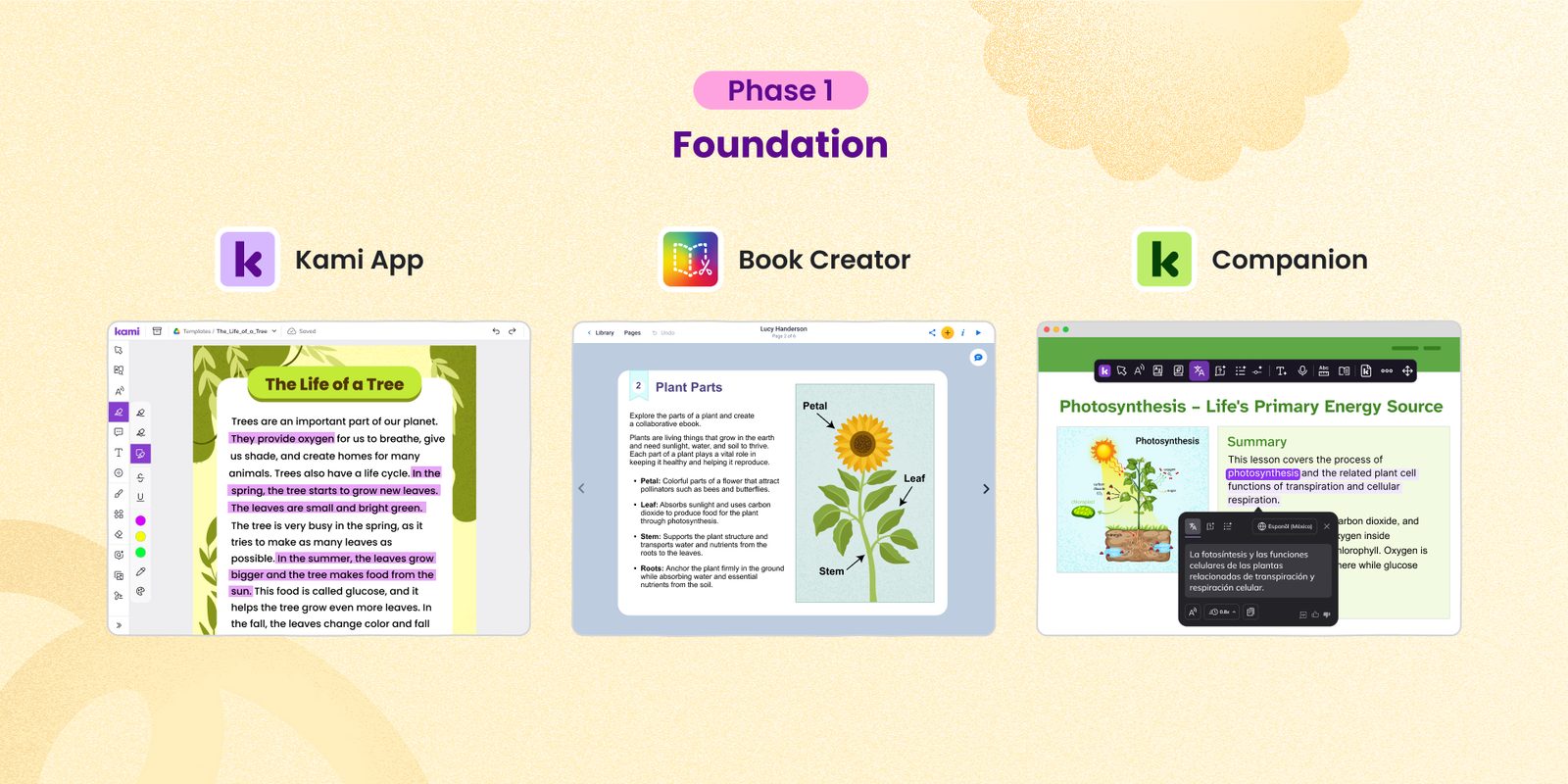
Assign a foundational worksheet in Kami App and ask students to highlight and label the parts involved in photosynthesis, including sunlight, water, carbon dioxide, glucose, and oxygen, directly on the page. Because annotation in Kami App happens live, a teacher using Class View can see which students are mislabeling and intervene right away.
“You can show me what you’re doing in real time. I can give you active feedback before you even hit submit,” is how Michael Albertson, Principal of the Virtual Campus at Des Moines Public Schools, put it.
Building the foundation only works if every student can access the content first. If a lesson includes other online learning resources, Kami Companion provides read-aloud and translation support, so students can access the same content regardless of where they start. For younger students, Book Creator’s library of ready-made books and reading-response journals offers that first encounter with new content in a format built for them.
Phase 2: Building Connections (DOK 2)
Here, knowledge becomes functional. Instead of defining terms in isolation, students examine cause-and-effect relationships: Why does sunlight matter to the leaf? How do stomata regulate gas exchange? By comparing data, summarizing relationships, and applying rules, students turn surface recall into active understanding.
How it works in practice:
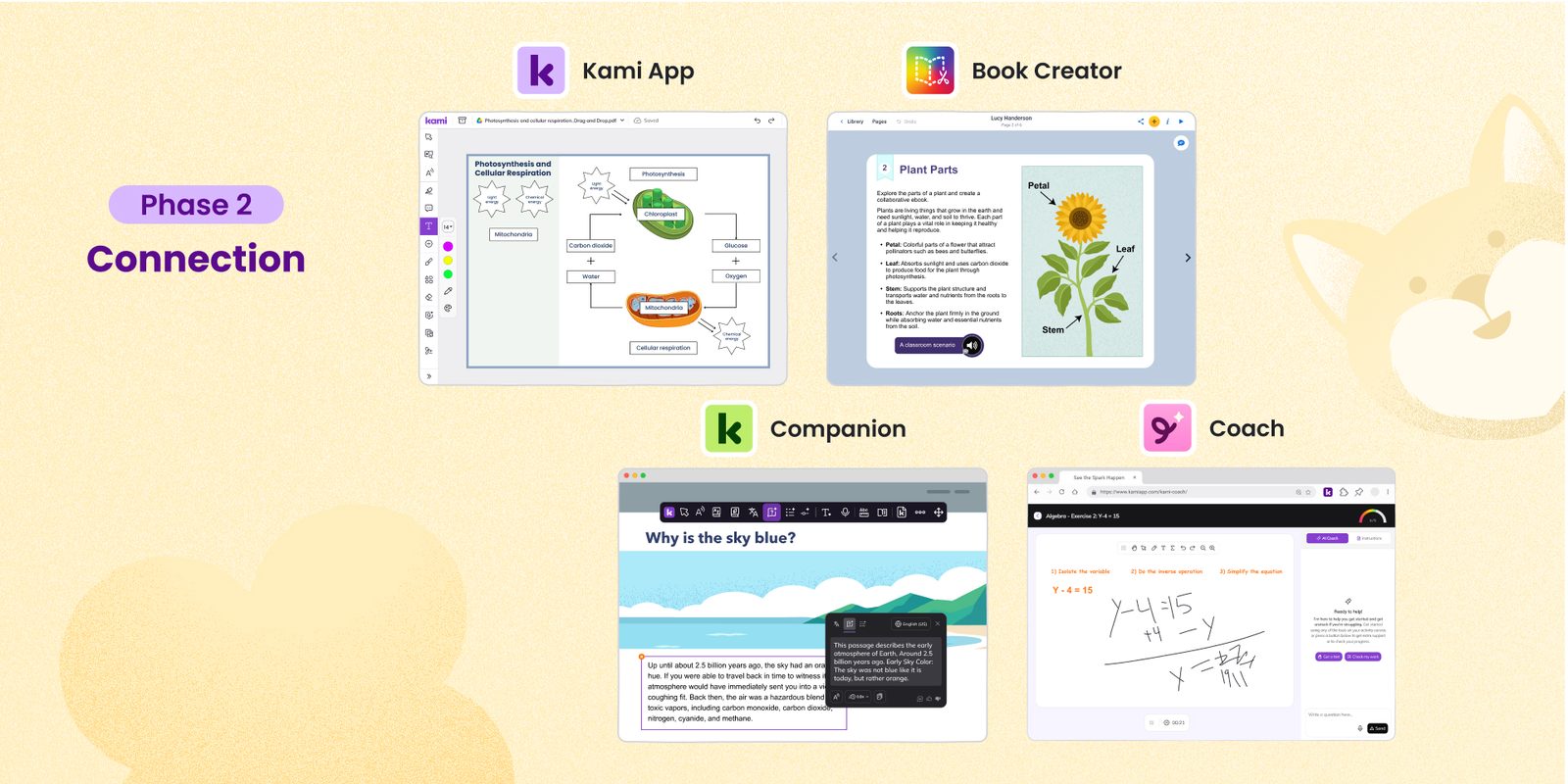
Collaborative annotation in Kami App allows small groups to work together and compare thinking on the same document, while Kami Companion keeps web-based resources accessible when the lesson adds to the class’s materials.
As ideas start to take shape, students begin moving their findings into Book Creator, organizing what they know as the deeper work of learning begins.
The best lessons show students how interconnected the world is, like taking that photosynthesis unit and using math to measure leaf surface area, graph light intensity, or calculate gas exchange rates.
But when students hit a wall with those math calculations during independent practice, momentum usually stalls. That’s where Kami Coach comes in, guiding students step by step through the problem without handing them the answer. Teachers stay informed in real time.
Phase 3: Strategic Thinking through Reasoning and Application (DOK 3)
Thinking deepens, and the scope of application widens. The question shifts from “What are the parts of a plant?” to “Why do plants matter when we talk about a changing climate?” Instead of recalling facts, students evaluate data, critique hypotheses, and justify their reasoning using evidence from multiple texts.
How it works in practice:
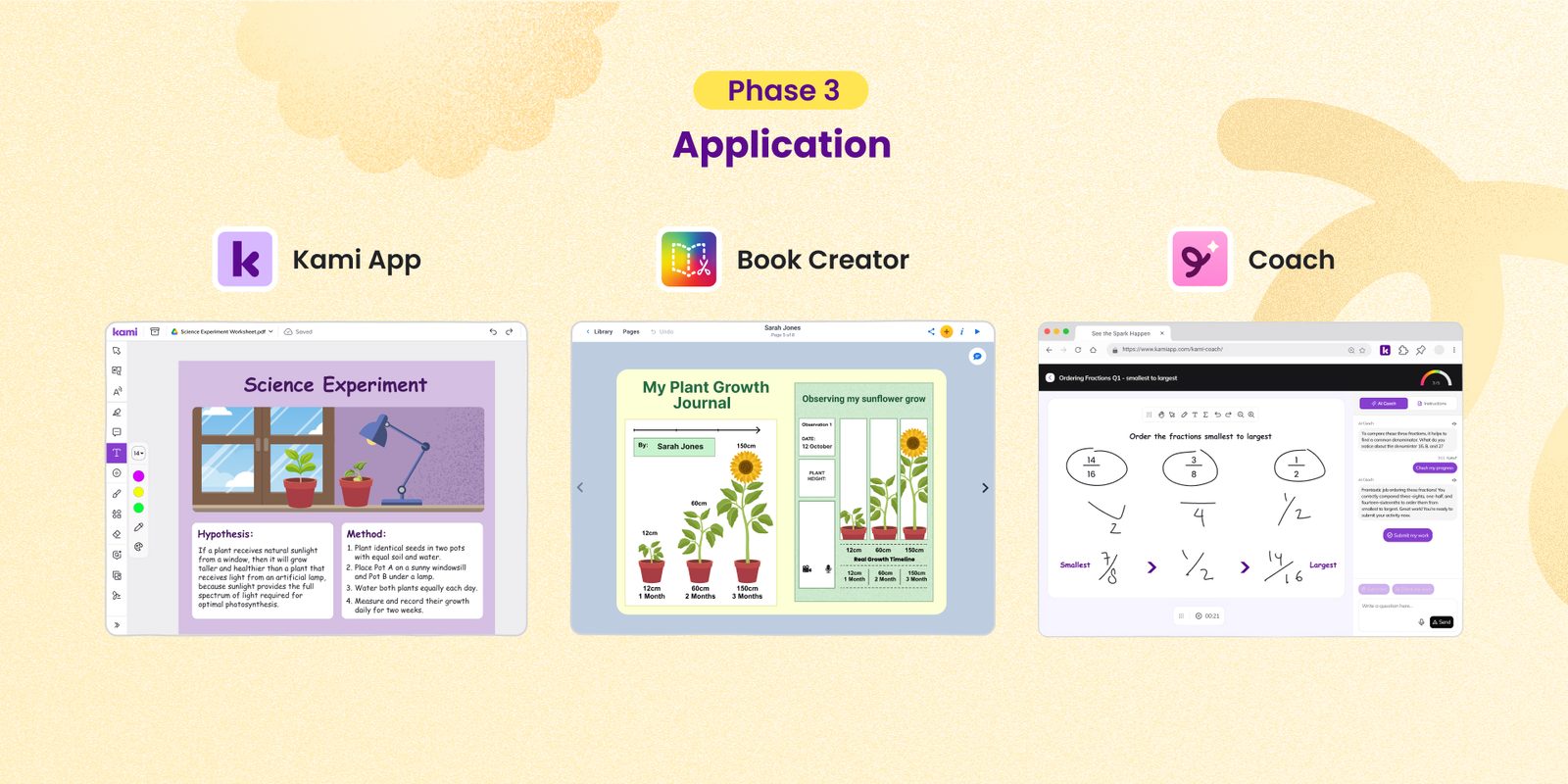
Using Kami App’s voice, video, and screen-recording features, students can explain their reasoning directly on the page. They can walk through evidence, talk through a complex dataset, or show how they reached a conclusion. That makes their thinking visible, audible, and easier to respond to.
In Book Creator, students synthesize these findings around broader essential questions, creating multimedia projects that combine text, audio, and video to demonstrate their reasoning.
Phase 4: Application (DOK 4)
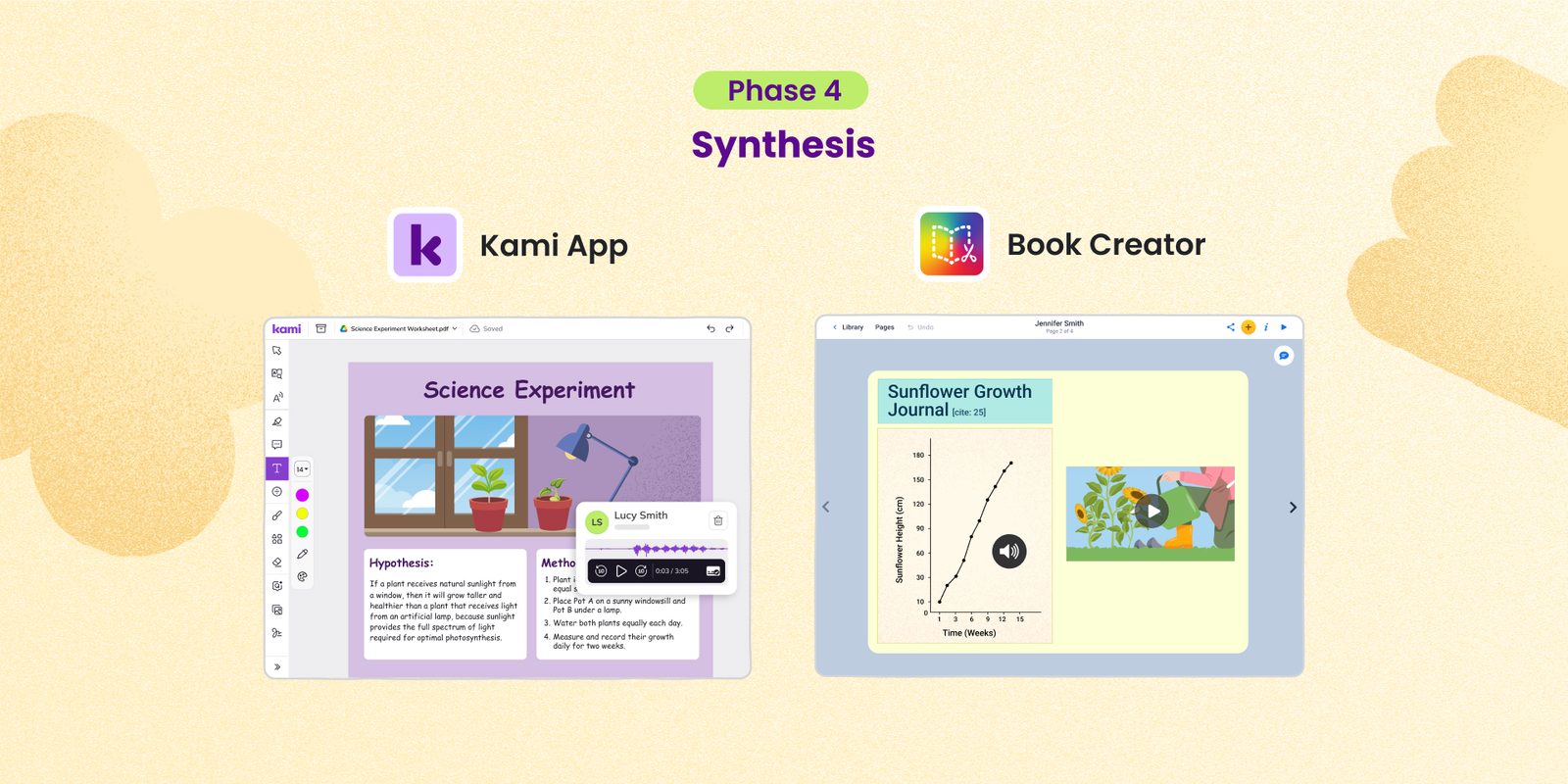
Phase 4 is powered by authentic student creation. Here, students synthesize knowledge across multiple sources or content areas to build or evaluate something new.
Phase 4 can happen in a single class period or across a multi-week unit.
- The quick Application task: A student compares two conflicting news articles on local land use, synthesizes the evidence, and records a two-minute video pitch proposing a compromise.
- The extended Application task: A student tracks plant growth over time in Kami App, using Book Creator to compile a multi-week multimedia journal with data, voice reflections, and video analysis.
Whether it’s a 20-minute synthesis or a 10-week portfolio, Kami App and Book Creator capture that deeper thinking:
- In Kami App: Students record voice and video explanations directly on the page, walking through their synthesis and reasoning in real time.
- In Book Creator: Students combine their dynamic Kami entries into polished, shareable artifacts of learning.
- Closing the loop: Peer review and teacher feedback tools keep the conversation going, turning final products into catalysts for the next learning cycle.
Why Kami works across the Cycle of Learning
You already carry the thread between phases. You remember what a student worked out last week, and you prompt them back to it when they need it.
A student annotates a worksheet on Monday. By Thursday, that file is somewhere in a folder, and the new activity opens as a blank page. The thinking they did the first time isn’t in front of them anymore. You end up rebuilding it from scratch at the start of the lesson.
That is where the Kami product suite matters. Kami App, Companion, Coach, and Book Creator keep that work together. Annotations, voice explanations, and drafts stay attached to the student as the work gets more demanding, so when you ask them to justify something in Phase 3, the evidence they gathered in Phase 1 is still there.
Kami doesn’t reduce the work of setting deeper tasks. What changes is that the reasoning stays with the work, so you can hear how a student got there instead of reconstructing it from what they hand in.
How to bring the Cycle of Learning to your classroom
Where to start
You don’t need to redesign a unit. Start with one task.
Look at this week’s assignments:
Place each one in a phase. Most teachers find more Phase 1 and 2 than they expected, which is normal. Foundation takes time, and you can’t reason about something you don’t yet know.
Pick one task and extend it.
Instead of a written answer, ask students to record a short voice or video explanation in Kami App or Book Creator, justifying their reasoning on the page. That single change moves Phase 2 work into Phase 3.
Stop starting from scratch.
Use Book Creator to collect a student’s Kami App work into one ongoing portfolio, so the next assignment builds on the thinking that’s already there.
If you’re a tech or curriculum admin:
Run the same audit across a grade level. Ask each teacher to bring one recent assignment and place it in a phase. The conversation that follows is usually more useful than the result, and the drop-off point it reveals gives you something specific to plan around.
Start with one assignment you already teach.
Blogs you may also like
Demystifying Depth of Knowledge (DOK): A Practical Guide for Teachers

How to deepen student thinking with the Cycle of Learning
Digital citizenship in schools: screen value over screen time